Adaptive AI Companion Behaviors Reshaping Narrative Choices in Indie Adventures Accessed via Subscription Services
Written by Blake Flores · Jul 23, 2026
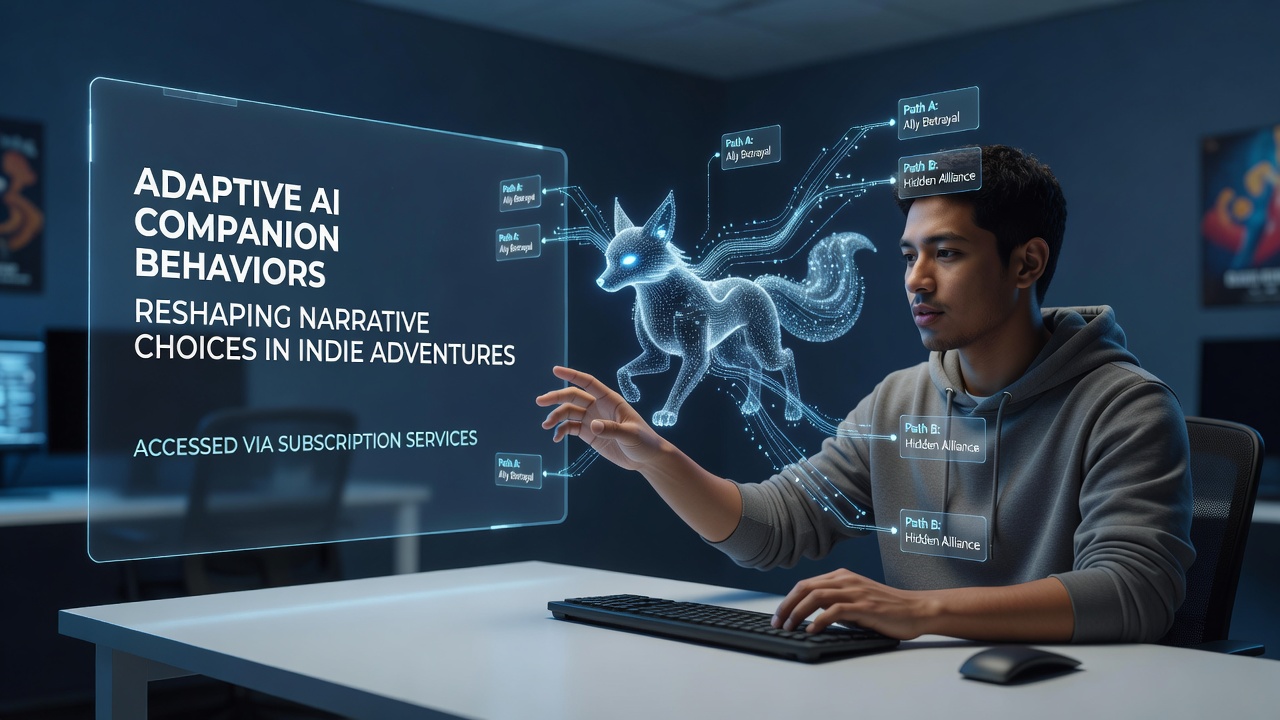
Adaptive AI Companion Behaviors Reshaping Narrative Choices in Indie Adventures Accessed via Subscription Services
Subscription platforms have expanded access to indie adventure titles since the mid-2020s, and adaptive AI companions now adjust dialogue trees and plot branches based on accumulated player data within those same services. Developers integrate machine learning models that track prior decisions across multiple sessions, allowing companions to alter their advice, alliances, and story interventions without requiring manual updates from the studio.
Core Mechanics of Adaptive Companion Systems
These companions rely on reinforcement learning loops that process choice patterns from thousands of subscribers, then generate context-specific responses during gameplay. A companion might shift from supportive guidance to subtle opposition when data shows the player consistently favors risk-taking paths, and this adjustment occurs in real time through cloud-processed variables rather than pre-scripted alternatives. Research indicates that such systems appeared in several 2025 releases on services like Xbox Game Pass and similar subscription catalogs, where developers reported reduced need for exhaustive branching scripts because the AI handled variance dynamically.
Data Collection and Personalization Layers
Platforms collect anonymized telemetry on dialogue selections, exploration frequency, and companion interaction frequency, then feed those inputs into models that refine companion personality weights for each account. Studies from institutions including the University of Melbourne's Games Research Lab have documented how these layers produce measurable divergence in narrative outcomes after roughly three hours of cumulative playtime. The models prioritize recent choices while retaining long-term preference vectors, which creates continuity across episodic releases common in indie adventures.
Subscription services benefit because one title can deliver distinct experiences to different users without additional storage demands on client devices. Data shows that retention metrics rise when companions demonstrate memory of earlier decisions, because players encounter fewer repetitive exchanges and more contextually relevant reactions.
Impact on Narrative Structure in Indie Titles
Indie studios have reduced linear quest chains in favor of modular event triggers that the AI companion can activate or suppress according to learned player profiles. One title released in early 2026 on a major subscription service demonstrated over 40 distinct companion-mediated endings generated from a base set of 12 core events, with the AI determining which events surfaced based on prior behavioral clusters. Observers note that this approach lowers development costs for smaller teams while increasing replay value for subscribers who access the game through rotating catalogs.
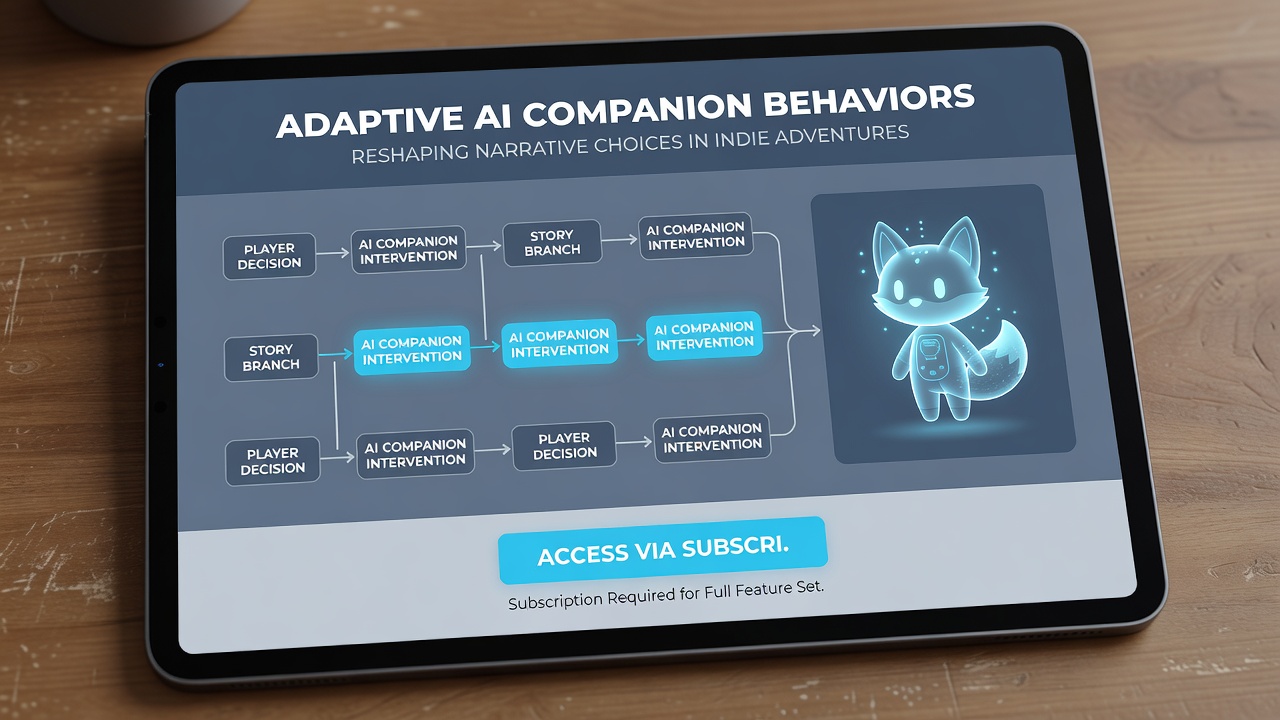
Yet the same flexibility introduces consistency challenges when companions must align with canonical story elements across multiple games in a shared universe. Developers address this by anchoring certain high-level traits in the model architecture, ensuring the companion never contradicts established lore even while adapting secondary behaviors. Figures from the Interactive Software Federation of Europe reveal that indie teams using these techniques completed narrative design phases 25 percent faster than comparable projects relying solely on manual branching.
Technical Infrastructure Behind Subscription Delivery
Cloud servers handle the heavy computation of AI inference, streaming companion responses to local clients with latency under 200 milliseconds in most regions as of July 2026. This setup allows lower-powered devices to run the games while the adaptive logic remains centralized and updatable. Service providers report that bandwidth usage for AI-driven dialogue stays modest compared with high-fidelity video streaming, because only text and lightweight animation triggers travel between server and device.
Integration with existing subscription authentication systems enables seamless continuation when users switch between devices or pause for weeks at a time. The model simply reloads the stored preference profile and resumes adaptation from the last recorded state.
Examples from Recent Releases
Take the 2025 title "Echoes of the Hollow," distributed exclusively through a subscription service, where the companion's evolving trust metric directly unlocked or closed entire regions based on cumulative interaction scores. Players who maintained consistent ethical alignments encountered different companion backstories and alternative quest resolutions than those who switched allegiances frequently. Another release from an Australian studio used similar systems to let the companion comment on the player's past failures in previous play sessions, creating a sense of shared history without additional writer input for every possible path.
Academic papers presented at the 2026 Foundations of Digital Games conference analyzed sentiment data from subscriber forums and found elevated engagement scores tied to companion adaptability rather than static character writing. These findings align with telemetry shared by platform operators indicating longer average session lengths in titles featuring such systems.
Conclusion
Adaptive AI companions continue to alter how narrative choices function within indie adventures offered through subscription services by shifting from static scripts to dynamic, data-informed responses. As of July 2026 the approach has spread across multiple platforms and regions, supported by infrastructure that keeps computational demands manageable for both developers and players. Industry reports from organizations such as the Entertainment Software Association and university research groups document measurable changes in design timelines, retention patterns, and narrative variety without requiring studios to expand writing teams proportionally. The pattern suggests further refinement of these systems will remain central to subscription-based indie adventures in subsequent years.