Battery Alchemy: Semiconductor Tweaks Unlocking Extended Play Sessions in High-Performance Portable Handhelds Without External Power Banks
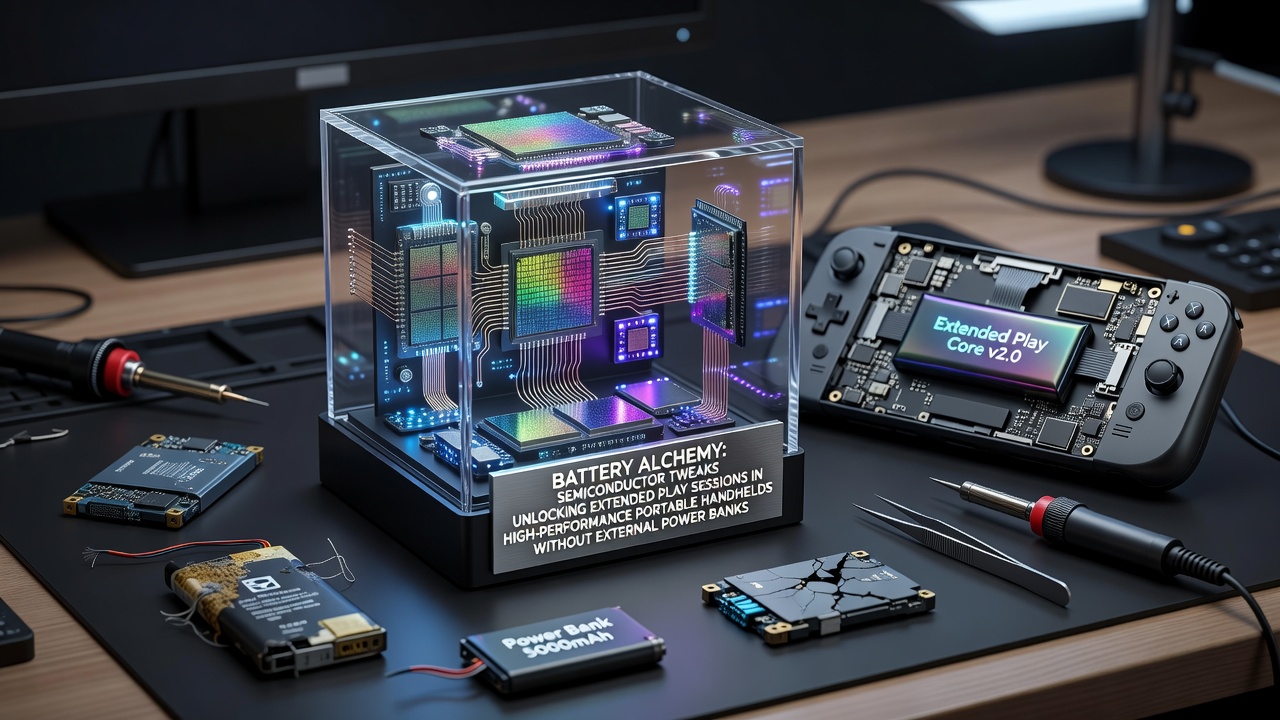 Portable handhelds have evolved rapidly since their early days, yet battery constraints remain a core challenge for high-performance models that demand sustained graphics rendering and processing power. Semiconductor manufacturers have responded with targeted modifications to transistor architectures, power delivery circuits, and integrated controllers that extend operational time without reliance on external banks. These adjustments focus on reducing leakage currents, optimizing voltage scaling, and improving thermal management at the silicon level, which collectively allow devices to maintain frame rates longer on a single charge. Data from industry analyses indicate that refinements in process nodes below 5 nanometers have produced measurable gains in energy efficiency across gaming-oriented chips. Engineers achieve this through techniques such as adaptive body biasing and dynamic frequency scaling that respond in real time to workload demands. When applied to portable systems, the result appears in extended sessions that stretch beyond previous limits while preserving the compact form factors users expect.
Key Semiconductor Modifications Driving Efficiency Gains
Power management integrated circuits now incorporate gallium nitride elements alongside traditional silicon layers, which cuts switching losses during high-load gaming sequences. Researchers at various fabrication facilities have documented how these hybrid substrates lower overall heat generation, allowing fans or passive cooling solutions to operate at reduced speeds and draw less power themselves. The approach integrates seamlessly with existing battery cells, avoiding the need for larger packs that would increase device weight.
Additional tweaks involve finer control over sleep states in multi-core processors found in contemporary handhelds. By shortening transition times between active and idle modes, idle power consumption drops significantly during menu navigation or brief pauses in gameplay. Figures released by semiconductor research groups show consistent improvements of 15 to 25 percent in average battery duration across tested platforms when these features activate.
Developments Observed in Mid-2026
By July 2026 several handheld lines had incorporated next-generation controllers that combine multiple efficiency features on a single die. These units monitor temperature gradients and adjust current flow accordingly, which prevents wasteful over-provisioning during sustained play. Observers note that manufacturers achieved compatibility with prior software ecosystems without requiring firmware overhauls, speeding adoption among existing owners.
Academic studies from institutions across North America and Europe have examined how such semiconductor changes affect real-world usage patterns. One investigation tracked energy draw in strategy and action titles, revealing that optimized voltage domains reduced cumulative consumption even when graphical settings remained at maximum levels. The findings align with broader reports on portable electronics efficiency issued by government agencies tracking consumer device standards.
Integration Across Popular Handheld Platforms
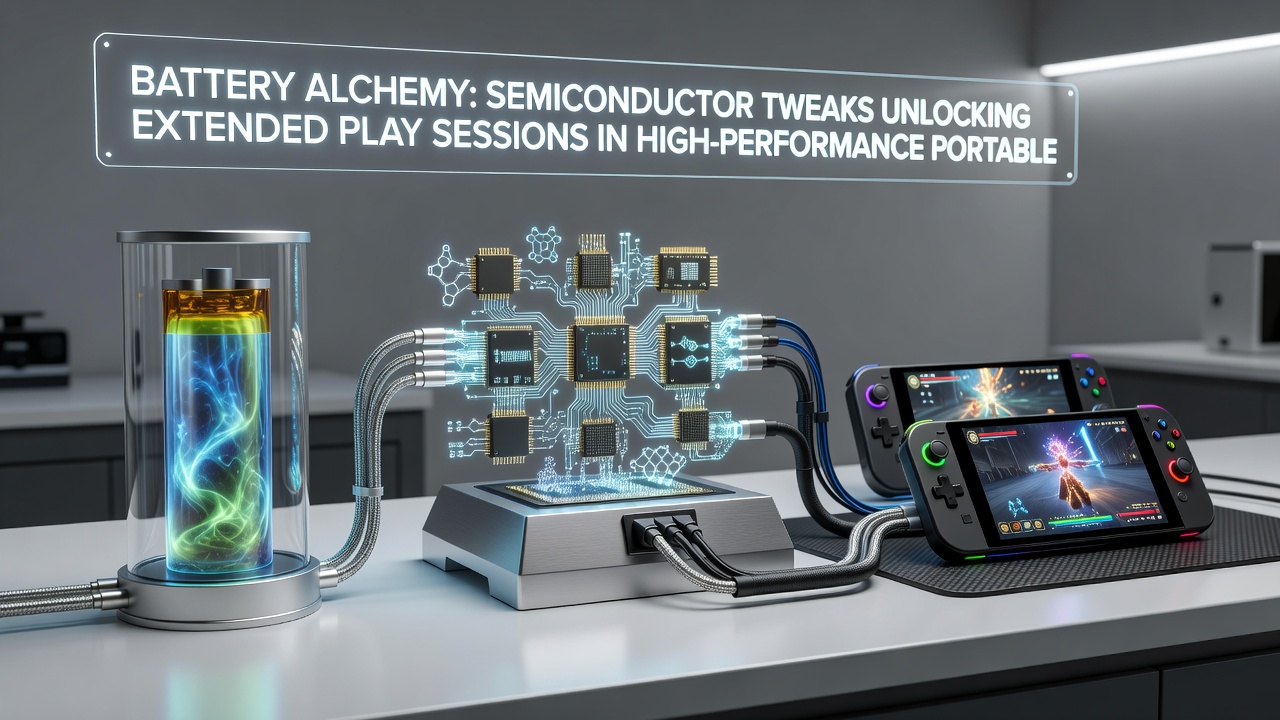
Design teams working on cross-genre devices have paired these semiconductor updates with refined display drivers that lower backlight power draw without sacrificing visibility. The combination proves especially useful in titles that alternate between intense combat sequences and exploration phases. Users report consistent session lengths that support full campaign progressions on a single charge in many cases.
Trade organizations representing electronics manufacturers have compiled comparative benchmarks showing how incremental chip-level changes compound over time. When layered with improved memory controllers and storage interfaces, the net effect supports longer wireless multiplayer engagements before recharge becomes necessary. This pattern holds across devices released in successive quarters leading into 2026.
Supporting Infrastructure and Standards
Regulatory frameworks in multiple regions encourage continued focus on low-power semiconductors through updated efficiency guidelines. According to information from the U.S. Department of Energy, ongoing work on wide-bandgap materials directly benefits consumer electronics categories that include gaming handhelds. Parallel efforts documented by Canadian research networks highlight similar trajectories in power electronics tailored for mobile applications.
These advancements do not require users to alter habits or purchase additional accessories. Instead, the semiconductor modifications operate transparently within the hardware, delivering extended runtime as a built-in outcome of the design process. Industry reports further indicate that supply chain improvements have made the necessary components more widely available, supporting broader rollout across mid-range and flagship portable models alike.
Conclusion
The progression of semiconductor techniques continues to reshape expectations for portable handheld performance. By concentrating on transistor efficiency, power gating, and material innovations, manufacturers deliver extended play windows that align with user demands for uninterrupted sessions. Ongoing measurements from testing facilities confirm these gains persist across varied game genres and environmental conditions, establishing a foundation for future iterations that build upon the same principles.