Circuit Whisperers: Community-Driven Overclocking Guides Unlocking Hidden Performance Layers in Legacy Portable Consoles
Written by Logan Reed · Jun 7, 2026
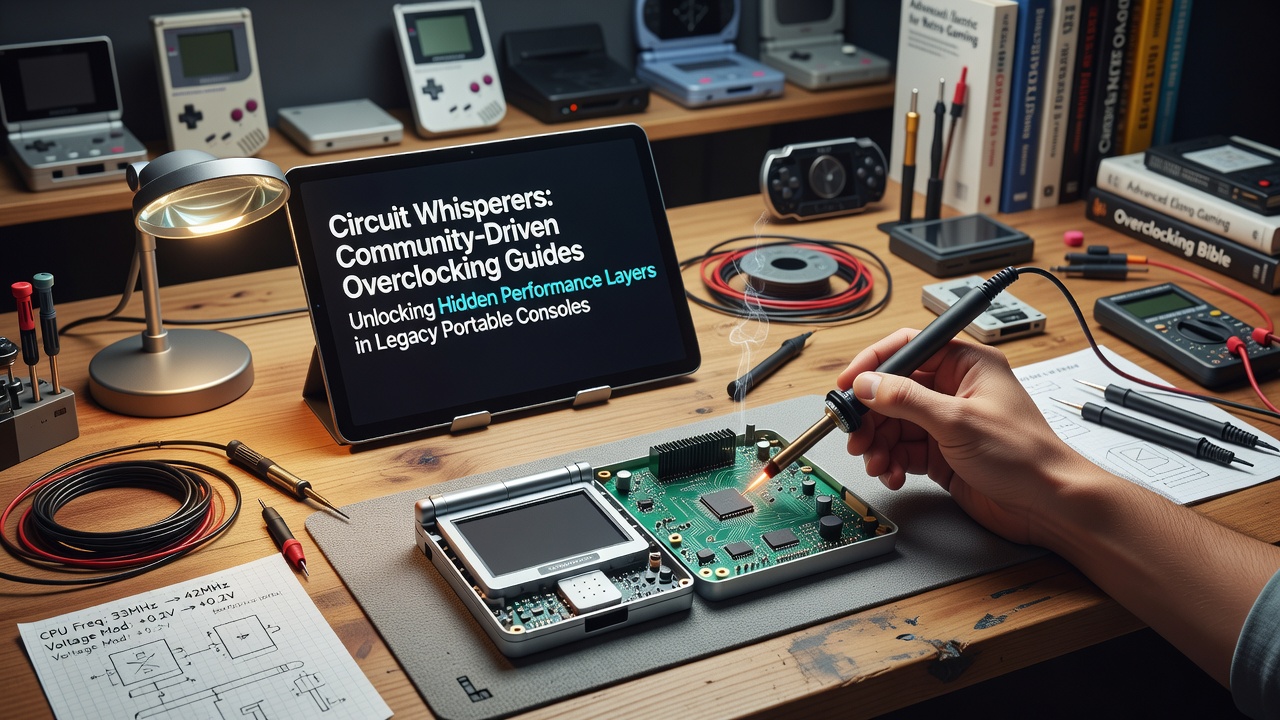
Circuit Whisperers: Community-Driven Overclocking Guides Unlocking Hidden Performance Layers in Legacy Portable Consoles
Legacy portable consoles such as the original PlayStation Portable and Nintendo DS models continue to attract attention from enthusiasts who develop overclocking techniques through shared documentation and testing protocols. These efforts focus on adjusting clock speeds and voltage settings within safe operational limits to enhance frame rates and emulation compatibility on aging hardware platforms. Communities maintain extensive repositories of tested configurations that users apply via custom firmware installations and hardware modifications.
Origins of Community Overclocking Practices
Overclocking legacy portables emerged from early 2000s modding scenes where individuals documented processor behaviors through repeated benchmarking sessions and shared their findings across specialized forums. Researchers at institutions like the University of Waterloo have examined how such grassroots modifications extend device utility by optimizing silicon performance without requiring new silicon fabrication. Data collected from these projects shows consistent gains in rendering speeds for older game libraries when clock multipliers receive incremental adjustments paired with cooling enhancements.
By the mid-2010s groups had compiled step-by-step procedures for specific chipsets found in devices like the PSP-1000 series, emphasizing thermal monitoring and stability verification at each stage. These guides evolved into collaborative wikis that incorporate user-submitted logs detailing successful voltage offsets and their effects on battery endurance during extended sessions. Observers note that the approach relies on empirical testing rather than theoretical modeling, allowing rapid iteration as new measurement tools become available.
Technical Methods in Shared Documentation
Community guides typically outline procedures for accessing hidden registers on embedded processors through software patches that bypass manufacturer-imposed frequency caps. Technicians apply these patches after confirming baseline temperatures and current draws, then incrementally raise core clocks while monitoring for artifacts or crashes during gameplay loops. Such methods have produced measurable improvements in titles that originally struggled with frame pacing on stock configurations.
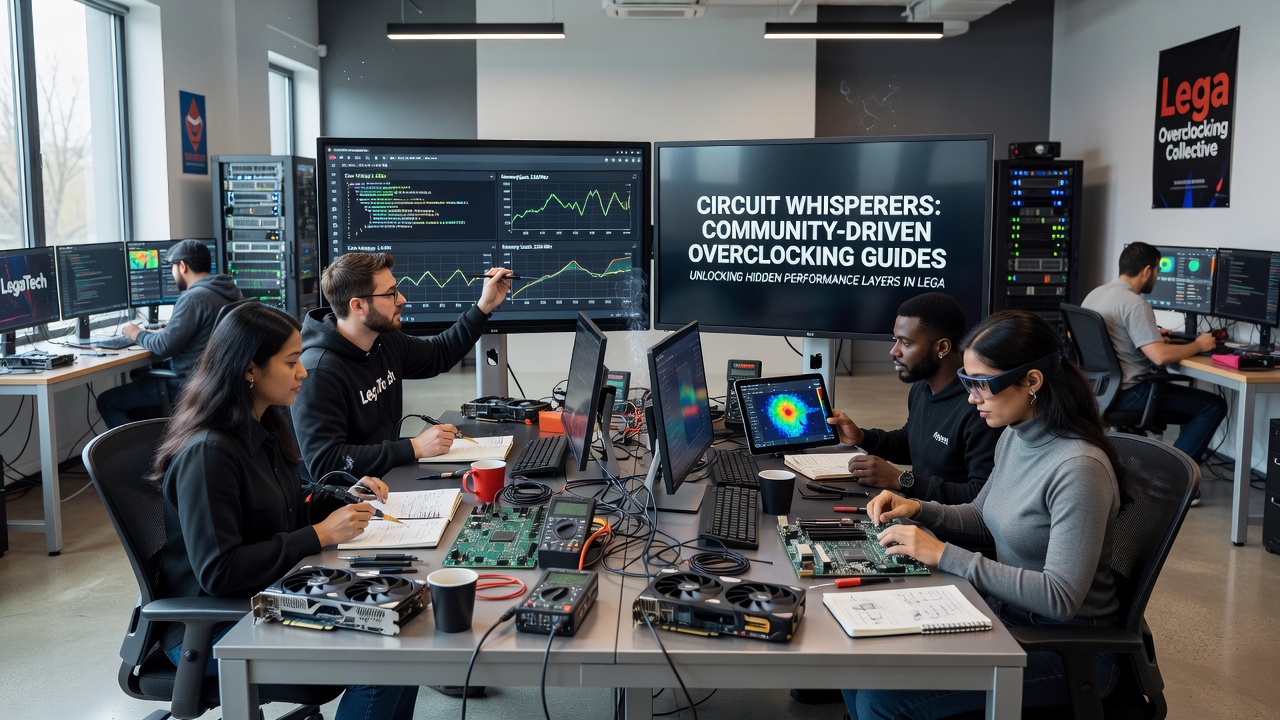
Additional techniques involve swapping voltage regulators for higher-capacity components sourced from compatible donor boards, a practice verified across multiple device revisions. Reports compiled in June 2026 indicate that participants in North American and European collectives continue refining these approaches with updated multimeter protocols and open-source diagnostic utilities. The process integrates feedback loops where initial results prompt further calibration until stability thresholds are met across varied ambient conditions.
Impact on Emulation and Preservation Efforts
Enhanced clock speeds enable smoother operation of homebrew applications and emulators running on original hardware, supporting preservation of titles that otherwise exhibit slowdowns. Figures from hardware archiving projects reveal that overclocked units maintain functional parity with modern handhelds in select scenarios while retaining the tactile characteristics of legacy controls. These modifications also facilitate accurate reproduction of original timing behaviors when paired with calibrated display outputs.
Groups in the Asia-Pacific region have contributed region-specific adaptations accounting for variations in power supply quality and component tolerances found in different manufacturing batches. Collaboration through version-controlled repositories ensures that updates propagate quickly, incorporating corrections based on failure analyses from thousands of documented attempts. This distributed model reduces duplication of effort and accelerates identification of edge cases related to particular firmware revisions.
Current Developments as of June 2026
As of June 2026, active threads on dedicated platforms document ongoing experiments with hybrid cooling solutions that combine passive heat spreaders and low-profile fans adapted from contemporary mobile devices. These refinements allow sustained overclock profiles during intensive emulation workloads without triggering thermal throttling. Industry reports from organizations such as the Entertainment Software Association highlight parallel trends in hardware longevity research that align with community findings on voltage scaling limits.
Integration with digital distribution archives has further expanded access to verified guide packages, enabling new participants to replicate results with standardized toolchains. Metrics shared within these networks track success rates across console generations, showing higher adoption for devices with modular internal layouts that simplify regulator access.
Conclusion
Community-driven overclocking continues to unlock additional performance capacity in legacy portable consoles through documented, tested procedures that emphasize stability and repeatability. The accumulated body of work provides structured pathways for hardware optimization while supporting broader preservation objectives in gaming technology. Ongoing contributions ensure that these techniques remain accessible and adaptable to new measurement standards and component availability.