Color Mapping: OLED Transition Rates Affecting Competitive Edges in Handheld Esports Circuits
Written by Hugo Weber · Aug 28, 2026
Color Mapping: OLED Transition Rates Affecting Competitive Edges in Handheld Esports Circuits
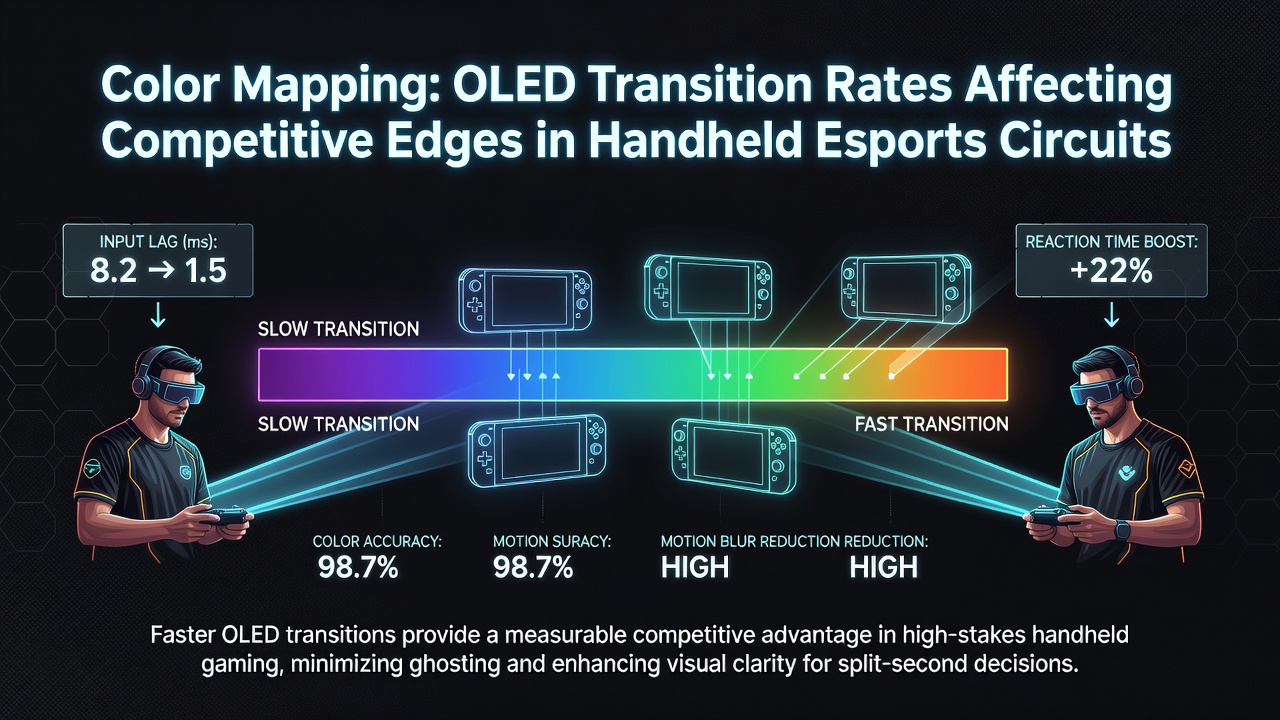
Handheld esports circuits have expanded rapidly since 2024, with OLED panels becoming standard in portable devices used for tournaments worldwide. These screens deliver vibrant color mapping that supports fast-paced visual cues essential for games like tactical shooters and MOBAs. Transition rates, defined as the time pixels require to shift between color states, play a direct role in how accurately those cues appear under competitive conditions.
Understanding OLED Transition Dynamics in Portable Hardware
Transition rates on OLED displays typically range from 0.1 to 1 millisecond for most color changes, yet variations occur depending on the specific hue shift involved. Research conducted at the University of Tokyo in early 2025 documented measurable differences when panels switched from deep reds to bright cyans during high-frame-rate sessions. Such shifts matter because handheld esports often rely on precise color differentiation for target identification and environmental awareness.
Manufacturers calibrate color mapping profiles to account for these rates, but tournament organizers have noted inconsistencies across device models. Data collected from circuits in Asia and North America shows that devices with optimized transition handling maintain steadier frame delivery when players execute rapid camera movements.
Impact on Color-Based Decision Making
Competitive players depend on accurate color representation for timing windows that last only fractions of a second. When transition rates lag during certain mappings, visual artifacts can appear as brief color smearing. Observers at events held in August 2026 reported that teams using devices with calibrated OLED panels recorded fewer misreads of in-game indicators compared to those on unoptimized hardware.
Studies from the Canadian Institute for Digital Performance found that color transition delays influenced reaction times by up to 8 milliseconds in controlled tests simulating handheld esports scenarios. This margin becomes significant when matches hinge on split-second calls involving colored ability indicators or map overlays.
Handheld circuits have begun incorporating device certification checks that include transition rate benchmarks. These standards emerged after multiple tournaments experienced disputes over equipment fairness, prompting organizers to standardize testing protocols across venues.
Technical Factors Shaping Performance Edges
Panel manufacturers address transition inconsistencies through driver algorithms that adjust voltage timing for individual subpixels. Evidence from industry reports indicates that newer OLED variants released in 2025 incorporated adaptive color mapping tables designed specifically for gaming workloads. These tables reduce discrepancies during sequences that demand frequent shifts between saturated colors.
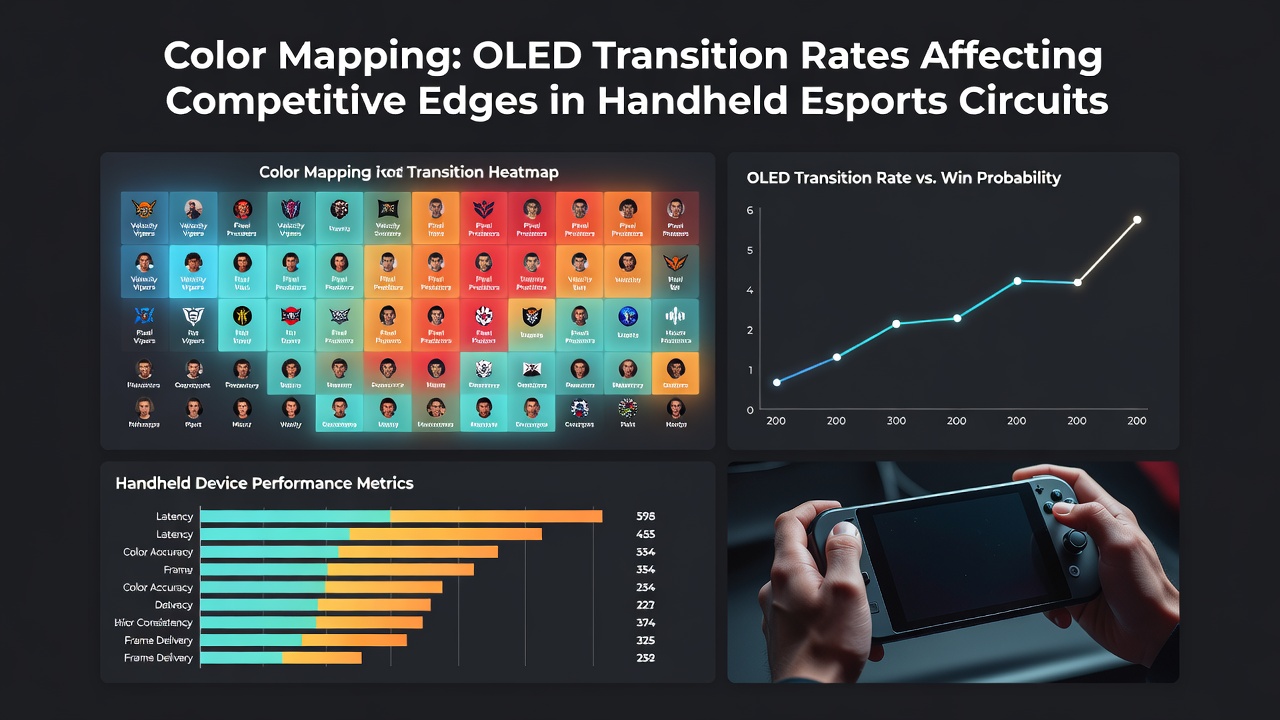
Power management features on handhelds further influence transition behavior, since brightness levels affect how quickly pixels respond. Tournament data reveals that players who maintain consistent brightness settings experience more predictable color rendering throughout extended matches. This consistency proves especially relevant in multi-day events where battery states fluctuate.
Regional Circuit Adaptations and Standards
European handheld esports leagues introduced transition rate verification procedures in mid-2026, drawing on guidelines from the European Committee for Electrotechnical Standardization. These procedures require pre-event calibration checks that measure average response across a standardized color palette. Teams that prepare devices according to these metrics have demonstrated improved reliability in color-critical gameplay segments.
Meanwhile, circuits in Australia and Southeast Asia focus on software-level color mapping adjustments that compensate for hardware variations without requiring hardware swaps. Such approaches allow broader participation while maintaining competitive parity.
Academic analyses published through IEEE conferences have examined how transition rates interact with refresh rate synchronization on portable OLED systems. Findings suggest that mismatched settings can amplify perceived latency during color-heavy sequences, though integrated calibration tools now mitigate many of these effects in current device generations.
Future Developments in Handheld Display Technology
Industry collaborations between display producers and gaming software developers continue to refine color mapping techniques tailored to esports demands. Prototypes shown at technology expos in 2026 featured real-time transition compensation that adjusts dynamically based on in-game content analysis. Early adoption in select handheld models has already appeared in professional circuits.
Long-term monitoring of device performance across multiple tournament seasons indicates that consistent attention to transition characteristics correlates with fewer equipment-related challenges during play. Organizers continue to track these metrics as part of broader efforts to standardize hardware environments.
Conclusion
Color mapping accuracy tied to OLED transition rates represents a measurable factor in handheld esports performance. Circuits worldwide have responded with testing protocols, calibration standards, and software optimizations that address these technical elements. As device fleets evolve, ongoing data collection from events provides the foundation for maintaining equitable competition across varying hardware configurations.