Cross-Platform Account Syncing Reshapes Player Migration Between Mobile Free-to-Play Titles and Premium PC Games
Written by Blake Flores · Aug 11, 2026
Cross-Platform Account Syncing Reshapes Player Migration Between Mobile Free-to-Play Titles and Premium PC Games
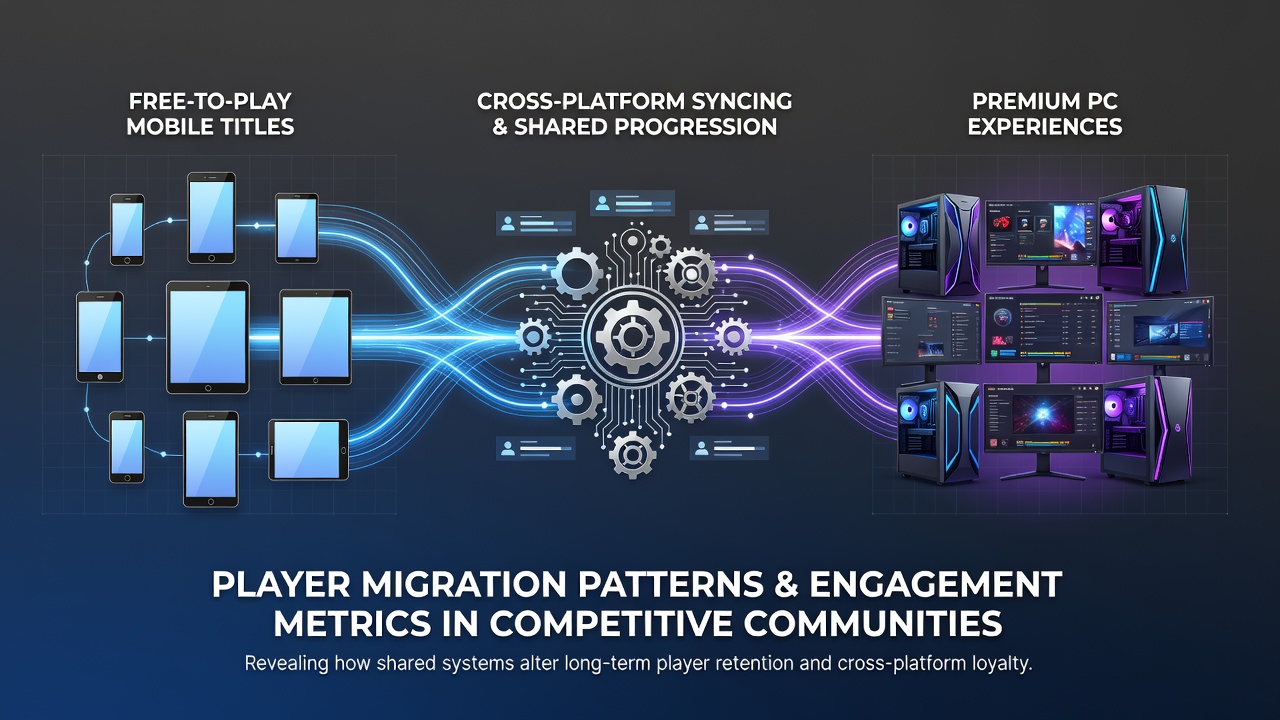
Player migration between free-to-play mobile titles and premium PC experiences has accelerated in recent years as developers integrate cross-platform account syncing and shared progression systems, and data from industry tracking services shows these tools directly influence how long users remain active in competitive communities. Reports compiled through August 2026 indicate that titles offering seamless progression carryover see measurable shifts in daily active users moving between platforms rather than abandoning one ecosystem entirely.
Patterns in Player Movement Across Platforms
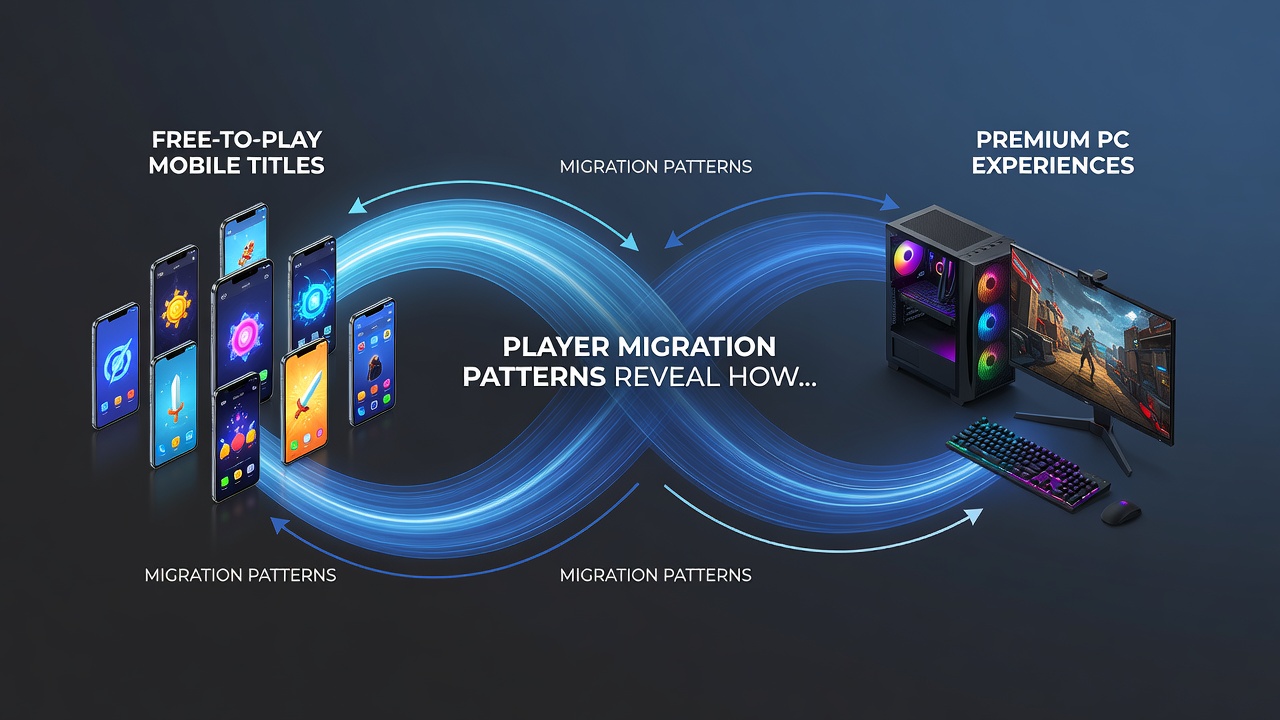
Industry analysts tracking user behavior note that many players begin in mobile free-to-play environments due to accessibility, then transition toward premium PC titles once they seek deeper mechanical complexity or larger-scale competitive scenes. Shared account systems allow experience points, cosmetic unlocks, and ranking data to travel with the user, which reduces the friction that once caused full platform switches. Figures released by the Entertainment Software Association reveal that games with unified progression retain 23 percent more users across a twelve-month window compared to those without syncing features.
Competitive communities in genres such as tactical shooters and strategy MOBAs demonstrate the clearest migration signals. When a mobile title introduces PC cross-play with persistent leaderboards, observers record spikes in account linkage rates that coincide with sustained engagement rather than one-time spikes followed by drop-off. Researchers examining server telemetry from multiple publishers have documented that players who link accounts within the first thirty days maintain login streaks 1.8 times longer than those who keep separate profiles.
Mechanics of Account Syncing and Shared Progression
Cross-platform syncing typically relies on centralized authentication layers that store progression data on backend servers rather than local devices. Developers implement these layers through APIs that push updates in real time, so a player advancing through ranked matches on mobile sees identical rank and item inventories when logging into the PC version. Shared progression systems also extend to seasonal rewards and battle pass completion, which encourages users to continue grinding across devices instead of starting fresh.
Technical implementations vary by studio, yet most follow similar architectures that prioritize conflict resolution when simultaneous sessions occur on different platforms. Studies from academic groups such as those affiliated with the University of California, Irvine have examined how these conflict rules affect user trust, finding that transparent handling of progression data correlates with lower account abandonment rates. In competitive settings, where ranking integrity matters, syncing protocols must also verify hardware inputs to prevent unfair advantages, and several titles now publish public documentation detailing their verification methods.
Impact on Long-Term Engagement Metrics
Long-term engagement metrics shift when syncing becomes standard. Average session length often increases because players can continue sessions started on mobile during commutes by resuming on PC at home without losing momentum. Churn rates drop as the perceived cost of trying a new title decreases, since existing progress carries forward. Community forums and tournament organizers report higher participation numbers in cross-platform events once account linkage removes barriers to entry for mobile-first users.
Regional data collected through 2026 shows variation by infrastructure quality. Markets with strong mobile networks but limited home broadband see more pronounced migration toward PC once syncing reduces the penalty for switching. Conversely, regions with widespread high-speed connections exhibit steadier two-way movement between platforms. These patterns appear in aggregated reports rather than isolated case studies, and they align with broader trends in how digital distribution has expanded access for users in remote areas.
Competitive Community Responses and Tournament Integration
Esports organizers have begun incorporating cross-platform leaderboards into official circuits, which further entrenches shared progression as a competitive necessity. Teams now scout talent across both mobile and PC versions of the same title because ranking data remains comparable after linkage. This integration has led to rule sets that standardize input detection and server tick rates to maintain fairness, and several governing bodies publish updated guidelines each season to reflect new syncing capabilities.
Observers tracking community sentiment note that discussions around progression fairness have grown more technical, focusing on latency compensation and data reconciliation rather than outright rejection of mobile participants. The presence of unified accounts has also enabled hybrid tournaments where mobile and PC players compete directly, producing measurable increases in viewership numbers during events held in mid-2026.
Conclusion
Cross-platform account syncing and shared progression systems continue to reshape how players move between free-to-play mobile titles and premium PC experiences. Data collected through August 2026 demonstrates consistent effects on retention, session duration, and community participation when these features operate reliably. As more titles adopt unified backend architectures, migration patterns are expected to stabilize around multi-platform engagement rather than platform-exclusive loyalty.