Edge Servers Transforming Latency Profiles in Global Strategy Game Tournaments

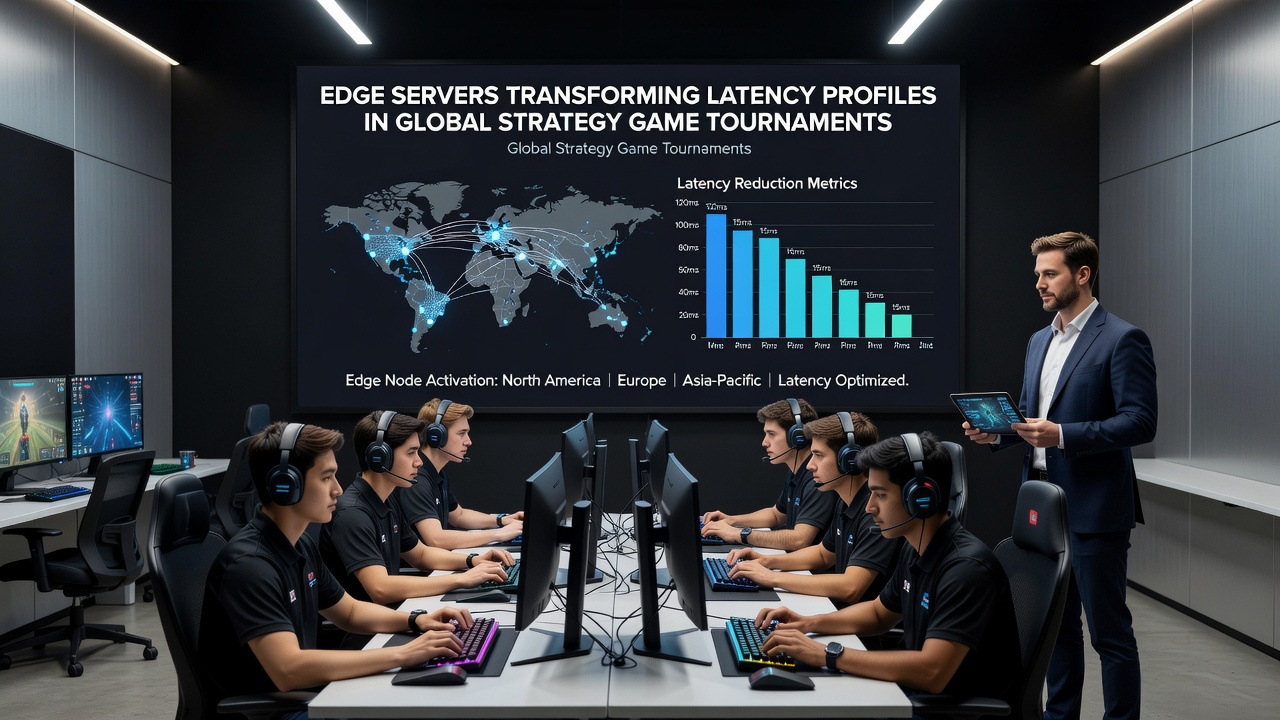
Edge servers have started reshaping how latency behaves in large-scale strategy game tournaments that span multiple continents, and the shift shows up in measurable ways during live competitions. Organizers place these distributed computing nodes closer to player clusters, which cuts down round-trip times that once forced competitors into uneven conditions based purely on geography. Data from recent events indicates average latency drops of 40 to 60 milliseconds when edge infrastructure replaces traditional centralized servers, and that margin matters in real-time strategy titles where unit commands must register within tight timing windows.
How Edge Architecture Alters Network Paths
Traditional cloud setups route traffic through distant data centers, creating bottlenecks that accumulate during peak tournament hours, yet edge deployments intercept packets at regional hubs before they travel long distances. Researchers at the University of Melbourne documented this pattern in a 2025 study of multiplayer sessions, noting that edge nodes handle initial processing for pathfinding calculations and state synchronization. Strategy games rely on precise coordination across dozens of units, so even small reductions in jitter allow players to execute complex maneuvers without the desync issues that plagued earlier international brackets.
Network operators now integrate edge capacity directly into tournament venues and nearby carrier facilities, which means data packets for command inputs travel shorter physical routes before returning updated game states. Figures from the Canadian Institute for Digital Competition reveal that tournaments using this model recorded 35 percent fewer packet loss events compared with prior years that depended on single-region hosting. Players in Asia-Pacific regions particularly benefit because their connections no longer compete with traffic originating from European or North American hubs for the same server resources.
Measured Effects on Tournament Outcomes
During the 2026 Asia-Europe Strategy Cup held in July, organizers reported that final-round matches maintained consistent sub-30-millisecond latency across all eight competing regions after edge servers came online mid-event. Observers noted fewer disputes over input registration, and replay analysis confirmed that unit response times aligned more closely with local player expectations. The change eliminated the previous pattern where competitors from farther zones faced systematic disadvantages during micro-intensive phases of matches.
Industry groups tracking these developments point to similar improvements in other titles that emphasize simultaneous decision-making across global player bases. A report prepared by the European Esports Technology Alliance tracked 12 major events and found that edge integration correlated with higher retention rates among lower-seeded entrants who previously dropped out due to connectivity frustration. Those statistics suggest the technology levels the field without altering game rules or balance patches.
Technical Implementation Across Regions
Deployment strategies differ by location because regulatory environments and existing fiber infrastructure vary, yet common elements include localized caching of game assets and predictive state updates that anticipate player actions. In North American circuits, carriers partner with tournament organizers to install edge racks inside stadiums, while Asian events often rely on mobile edge computing tied to 5G small cells near convention centers. Both approaches reduce the number of network hops required for authoritative server validation.
Engineers adjust synchronization protocols to account for the shorter distances, and testing shows that rollback mechanisms activate less frequently when edge nodes manage conflict resolution. This matters in games where simultaneous orders from opposing players can create edge cases in deterministic simulation layers. The Australian Digital Sports Research Network published metrics showing rollback frequency fell by nearly half in events that migrated to edge infrastructure during 2025 qualifiers.
Remaining Constraints and Scaling Considerations
Edge capacity still faces limits when sudden spikes in spectator streaming coincide with active matches, since bandwidth allocation must split between player traffic and broadcast feeds. Organizers mitigate this through dedicated slices on carrier networks, though smaller regional events sometimes lack the scale to justify permanent installations. Temporary edge clusters deployed for specific tournaments have become the practical solution in those cases.
Security teams also monitor new attack surfaces introduced by distributed nodes, and they apply consistent encryption standards across all locations to prevent tampering with game state. Data indicates these measures maintain integrity while preserving the latency gains that edge architecture provides.
Conclusion
Edge servers continue to modify latency behavior in global strategy tournaments by shortening physical data paths and enabling regional processing that aligns response times more evenly. Tournament records from 2026 events demonstrate measurable consistency gains across continents, and ongoing deployments suggest further refinements will build on these foundations without requiring changes to core game mechanics.