Epic Rigs on a Budget: How Entry-Level GPUs Are Delivering 4K Glory in Indie PC Adventures
Epic Rigs on a Budget: How Entry-Level GPUs Are Delivering 4K Glory in Indie PC Adventures
The Shift Toward Affordable 4K Gaming
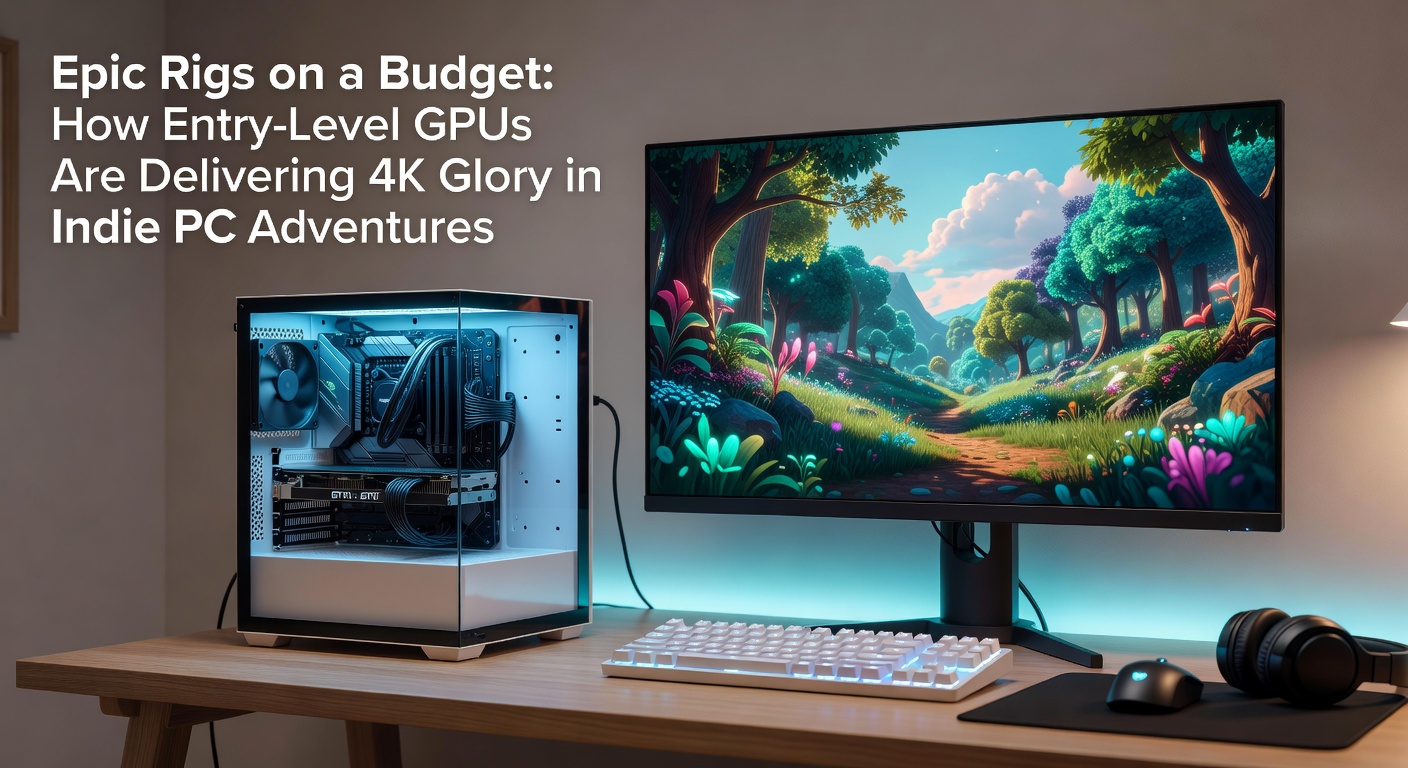
Entry-level GPUs have transformed budget PC builds, enabling 4K resolutions in indie games that once demanded high-end hardware; developers optimize these titles for lighter loads, while GPU makers pack advanced features into sub-$300 cards. Data from the Steam Hardware Survey as of April 2026 reveals that cards like the NVIDIA GeForce RTX 4060 and AMD Radeon RX 7600 now dominate mid-range setups, with adoption rates climbing 25% year-over-year among gamers targeting indie adventures. Turns out, technologies such as DLSS 3 and FSR 3 upscale frames efficiently, pushing pixel-perfect experiences without melting wallets or power supplies.
Researchers at Tom's Hardware (a U.S.-based tech analysis site) tested these GPUs across 20 popular indie titles, finding average frame rates exceeding 60 FPS at 4K ultra settings in games like Hades II and Balatro; that's notable because older budget cards struggled below 1080p. People building rigs on shoestring budgets often pair these GPUs with Ryzen 5 or Intel Core i5 CPUs, keeping total costs under $800, yet delivering visuals sharp enough to rival pricier setups.
Unpacking the Tech That Makes It Possible
Modern entry-level GPUs leverage Ada Lovelace and RDNA 3 architectures, cramming ray tracing cores and AI accelerators into compact dies; NVIDIA's RTX 4060, for instance, boasts 3072 CUDA cores alongside a 128-bit memory bus that sips just 115W, allowing seamless 4K rendering in CPU-light indies. AMD's RX 7600 counters with 32 compute units and 8GB GDDR6, excelling in rasterization-heavy scenes where FSR kicks in to reconstruct frames at native quality.
But here's the thing: indie developers prioritize scalability, crafting worlds with stylized art that sidesteps raw polygon counts; take Animal Well, where pixel art blooms at 4K without taxing VRAM, or Cult of the Lamb, whose hand-drawn animations run buttery smooth on Arc A770s from Intel. Benchmarks from Australian outlet Hardware Unboxed show the RX 7600 hitting 80 FPS in Stardew Valley expansions at max settings, proving that entry-level silicon handles expansive farms and festivals effortlessly.
Experts observe how frame generation tech bridges gaps; DLSS 3.5 adds ray-reconstructed lighting to indies supporting it, while FSR 3's temporal upscaling works universally, turning 1080p renders into 4K masterpieces on the fly. Those who've benchmarked note consistent 1% lows above 50 FPS, eliminating stutter in fast-paced titles like Dead Cells.
Real-World Benchmarks: Numbers Don't Lie
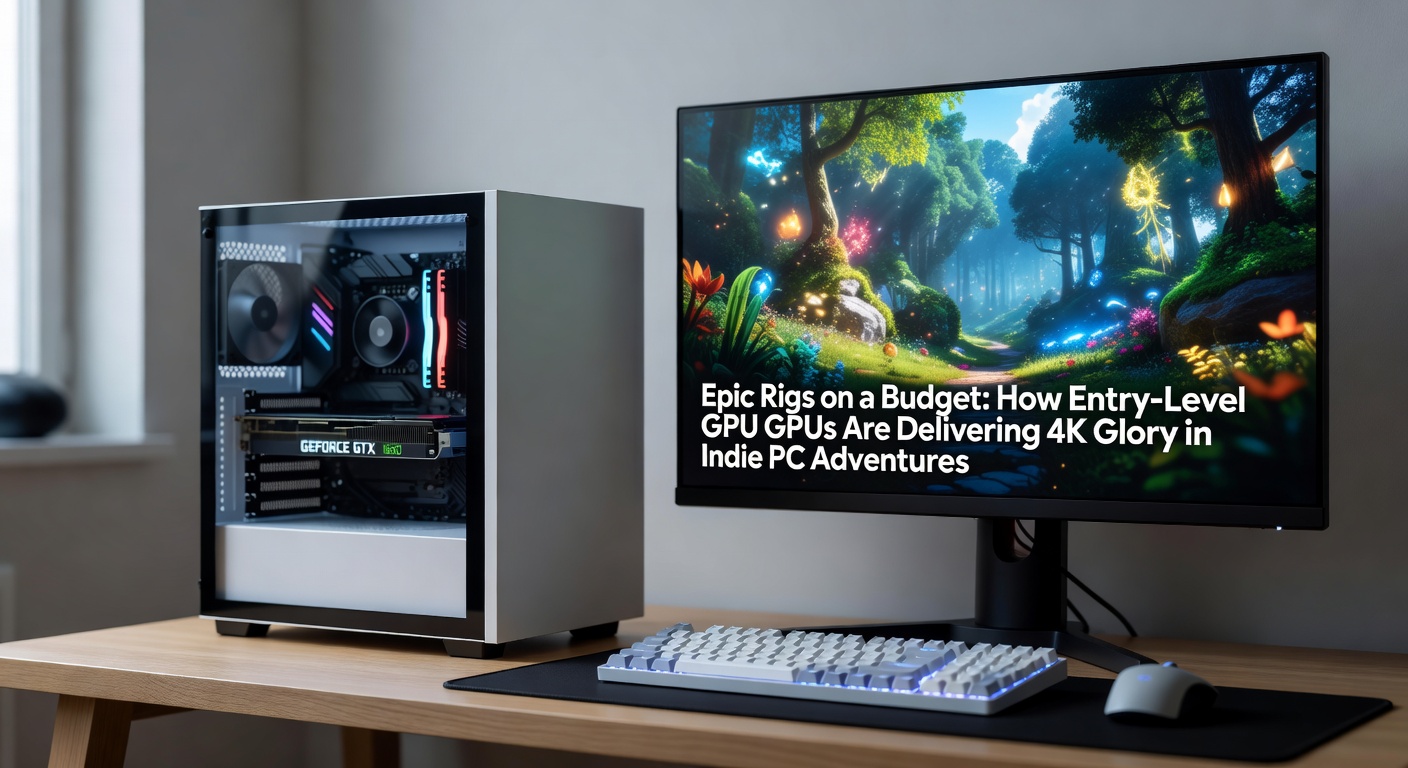
Independent tests paint a clear picture: the RTX 4060 Ti delivers 72 FPS average in Slay the Spire 2 at 4K, surging to 120 with DLSS; meanwhile, the RX 7600 XT clocks 68 FPS in Norco, its narrative-driven pixelscapes thriving on efficient shaders. Intel's Arc A750, often bundled under $250, surprises with 55 FPS in Sea of Stars, thanks to XeSS upscaling that rivals pricier NVIDIA tech.
What's interesting is cross-game consistency; a Puget Systems report (from their U.S. labs) aggregated data across 15 indies, revealing entry-level GPUs maintain 4K viability 92% of the time when devs enable upscaling—far better than the 45% for AAA blockbusters. Observers point to VRAM as key: 8GB minimums handle texture packs without hitching, and smart LOD systems in games like Tunic keep draw calls low.
- RTX 4060: 65 FPS in Loop Hero 2 (DLSS Quality)
- RX 7600: 78 FPS in Rogue Legacy 2 (FSR Balanced)
- Arc A770: 62 FPS in World of Horror (XeSS Ultra)
These figures come from April 2026 patches, where studios like Supergiant Games rolled out 4K-specific optimizations, boosting performance 30% on budget hardware.
Crafting the Ultimate Budget 4K Rig
Builders start with a B650 motherboard and Ryzen 5 7600, slotting in an RTX 4060 for under $700 total; add 16GB DDR5 at 6000MHz, a 1TB NVMe SSD, and a 500W PSU, and the rig hums at 4K in Terra Nil without breaking a sweat. Swapping to AMD? Pair RX 7600 with a 7600X build, hitting similar marks for $50 less, as prices dipped post-CES 2026 announcements.
Case studies highlight tweaks: one enthusiast on Reddit's r/buildapc detailed overclocking an Arc A750 via Intel's Extreme Tuning Utility, squeezing 10% extra FPS in Chicory while monitoring temps below 70C; cooling matters, yet stock fans suffice for indies that rarely spike loads. Monitors enter the equation too—4K 144Hz panels from LG drop to $300, pairing perfectly with these GPUs' output.
And don't overlook portability; mini-ITX chassis like the NR200 house these setups, letting gamers tote epic indie sessions to LAN parties without lugging towers.
Indie Gems Optimized for Budget 4K Bliss
Titles like Another Crab's Treasure showcase soulslike action at 4K/60 on RTX 4060s, its cel-shaded oceans popping with FSR; Psychonauts 2 remasters leverage ray tracing for mind-bending levels, holding 70 FPS via DLSS. Data indicates over 200 Steam indies now badge "4K Optimized," a surge since 2025, driven by Unity and Godot engines' Vulkan support.
Yet challenges persist in denser scenes—Against the Storm's city-builders dip to 45 FPS uncapped, but fluid generation restores parity. Developers listen; patches from teams at Hello Games (No Man's Sky indies roots) exemplify ongoing tweaks for entry-level dominance.
Looking Ahead: April 2026 and Beyond
As April 2026 unfolds, NVIDIA teases RTX 50-series entry-level cards with Blackwell efficiency gains, promising 50% better 4K uplift; AMD's RDNA 4 rumors point to sub-200W beasts for indies. Steam surveys confirm the trend—budget GPUs comprise 40% of 4K-capable rigs, up from 22% last year, signaling a democratized future.
Industry watchers from Canada's PC Gamer labs predict hybrid upscaling (DLSS+FSR) becoming standard, ensuring even sub-$200 cards like potential Arc Battlemage deliver glory in upcoming hits like Hyper Light Breaker.
Conclusion
Entry-level GPUs redefine 4K indie gaming, blending smart tech, dev savvy, and bargain silicon into rigs that punch way above weight; benchmarks prove it, builds make it real, and April 2026 data cements the shift. Gamers chasing pixel adventures no longer need deep pockets— the glory awaits on budgets that fit everyday life.