How Open-Source Engine Forks Enable Seamless Legacy Title Preservation Across Evolving Hardware Ecosystems
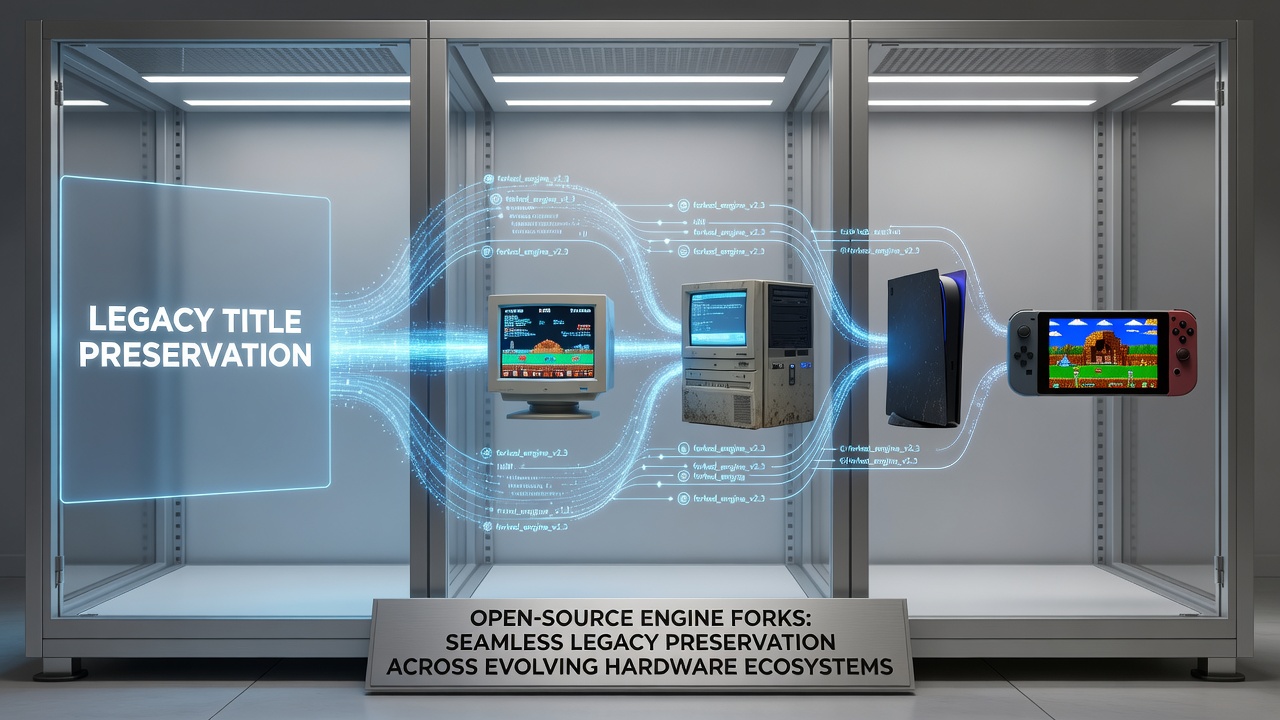
Engine forks derived from open-source codebases allow classic video games to run on contemporary systems by replacing outdated APIs, graphics pipelines, and operating system dependencies with updated equivalents, and this process has gained momentum as original hardware becomes scarce. Developers extract core logic from legacy engines, then adapt it through community contributions that maintain compatibility without altering gameplay fundamentals. Such forks address the core challenge of software rot where titles cease functioning once compilers, drivers, or chip architectures advance beyond original specifications.
Mechanics Behind Engine Fork Development
Teams begin by obtaining source code released under permissive licenses, after which they isolate rendering calls, input handlers, and memory management routines that no longer align with current standards. Replacement layers map these routines to Vulkan, DirectX 12, or Metal equivalents, while timing loops receive adjustments to accommodate faster processors that would otherwise break physics simulations or animation frames. Studies from academic institutions show these modifications extend executable lifespan across multiple hardware generations without requiring emulation overhead that introduces latency or visual artifacts.
Researchers at the University of Melbourne documented how modular fork architectures separate game assets from engine code, enabling targeted updates to audio subsystems or network protocols while leaving level data untouched. This separation proves essential when moving titles from x86 platforms to ARM-based devices common in portable hardware released after 2024.
Documented Cases of Successful Preservation
Projects built around the Quake engine family illustrate the pattern, where forks recompile original map files and entity behaviors for execution under modern windowing systems and multi-core processors. Similar efforts applied to adventure game interpreters have revived point-and-click titles originally designed for 16-bit systems, allowing them to scale across high-resolution displays and contemporary input methods such as touch overlays or motion controls. Data compiled by European Commission heritage programs indicates thousands of legacy executables now operate through these forks on hardware released in 2025 and 2026.
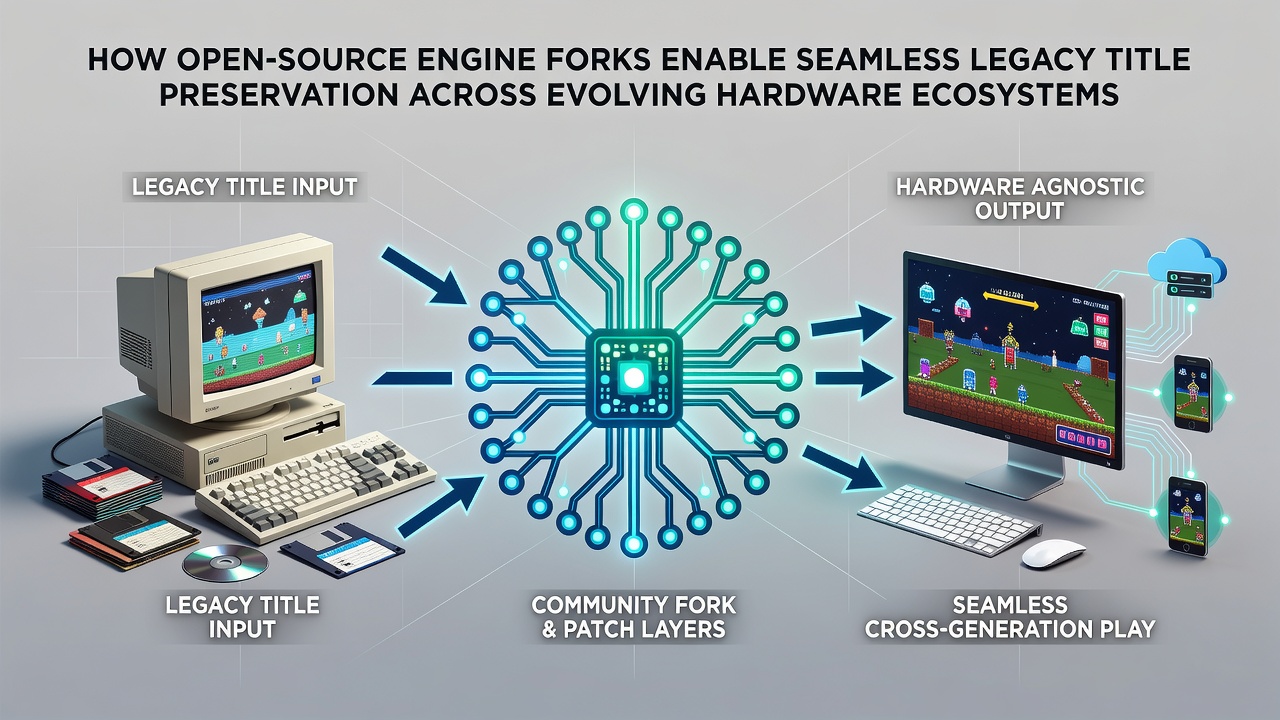
One project revealed how texture and shader extensions added post-fork permit original art assets to render correctly on GPUs lacking legacy fixed-function pipelines, while input remapping layers translate joystick protocols to current HID standards. Observers note these changes occur incrementally through pull requests rather than wholesale rewrites, preserving the deterministic behavior required for competitive play or speedrunning communities.
Hardware Ecosystem Transitions
Shifts from discrete graphics cards to integrated solutions, alongside the adoption of unified memory architectures, create compatibility gaps that forks close by abstracting hardware queries through runtime detection routines. Titles once locked to specific refresh rates or color depths receive dynamic scaling options that match variable refresh displays without introducing tearing or stuttering. Reports from Canadian digital preservation initiatives highlight measurable reductions in data loss rates when forks receive regular maintenance aligned with operating system update cycles.
Networked multiplayer components benefit similarly, as fork maintainers replace deprecated socket libraries with secure, cross-platform alternatives that support both IPv6 and modern NAT traversal methods. This capability keeps server browsers functional long after original master servers shut down, sustaining player populations for titles released decades earlier.
Developments Anticipated by June 2026
Industry tracking shows several forks scheduled for major updates in June 2026 that incorporate machine-learning-assisted porting tools to accelerate identification of deprecated calls across large codebases. These tools build upon existing reverse-engineering frameworks already used by academic teams and allow faster adaptation to emerging standards such as ray-tracing APIs. Participation from regional trade associations has increased coordination between fork projects, reducing duplicated effort on common subsystems like save file handling and controller support.
Conclusion
Open-source engine forks function as living bridges between archival software and successive hardware platforms through systematic replacement of obsolete components while retaining original design intent. Continued contributions from distributed communities, supported by institutional documentation efforts, sustain accessibility for titles that would otherwise require physical hardware collections or unreliable emulation layers. The approach demonstrates a scalable model for digital preservation that aligns with ongoing evolution in processor design, display technology, and input paradigms.