How Texture Streaming Pipelines Enable Fluid Exploration Loops in Open-World Mobile Titles from Emerging Studios
Written by Logan Reed · Aug 4, 2026
How Texture Streaming Pipelines Enable Fluid Exploration Loops in Open-World Mobile Titles from Emerging Studios
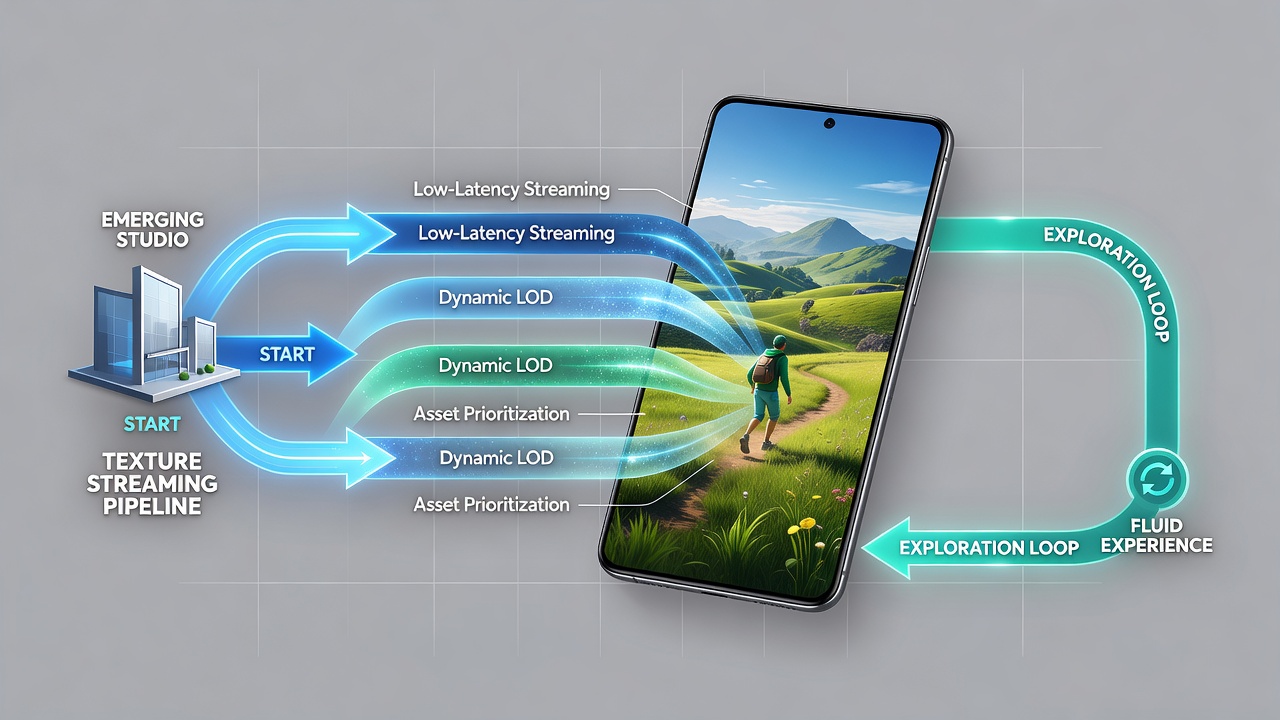
Texture streaming pipelines manage teh on-demand loading of high-resolution textures in open-world mobile games, and emerging studios have adopted these systems to support seamless player movement across large environments without interrupting the core exploration loop. Data from industry reports indicates that mobile devices typically allocate between 2 GB and 6 GB of RAM for game processes as of August 2026, which forces developers to prioritize streaming over preloading entire asset sets. Researchers at the University of Waterloo’s Games Institute have documented how these pipelines reduce memory spikes by up to 65 percent in titles exceeding 40 square kilometers of explorable space.
Core Mechanics of Texture Streaming on Mobile Hardware
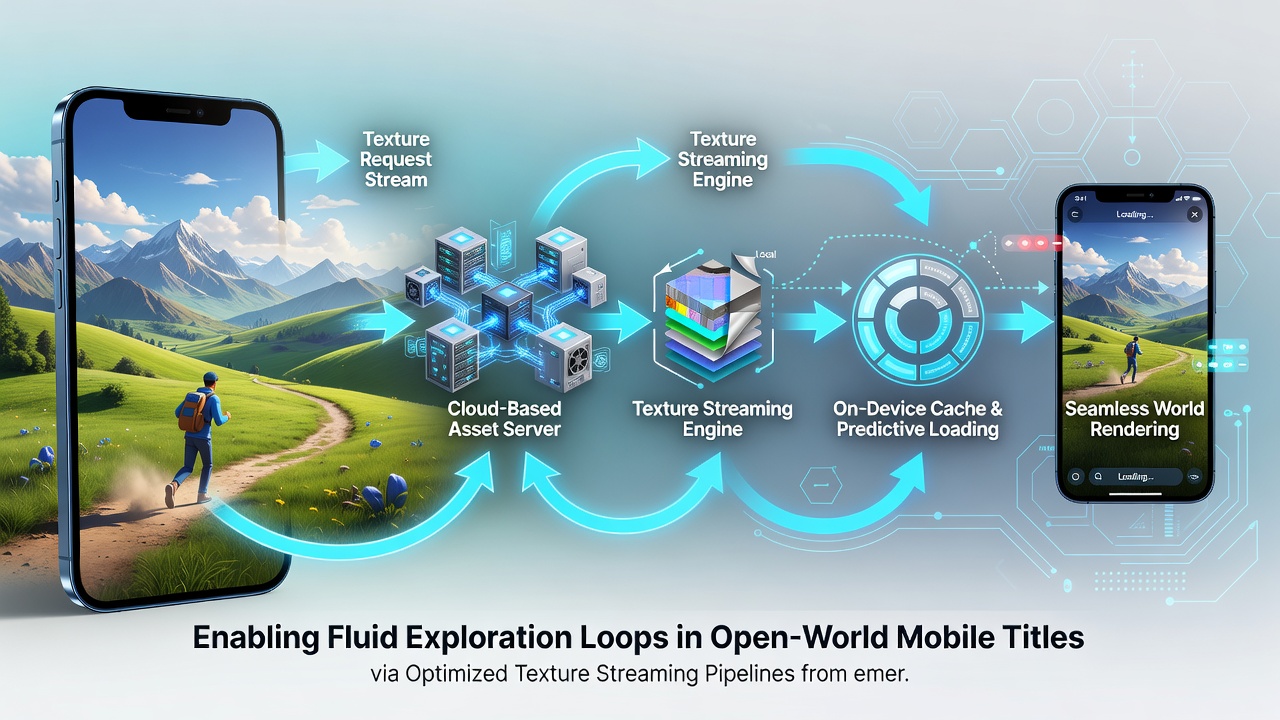
Developers implement mipmapping hierarchies combined with priority queues that evaluate camera distance, player velocity, and occlusion data to decide which texture levels load first, and this approach keeps frame rates stable while the player traverses dense biomes or urban districts. The pipeline divides assets into 128x128 or 256x256 tiles that stream asynchronously through background threads, whereas traditional full-asset loading would exceed available memory budgets on mid-range Android and iOS devices. Observers note that synchronization between the CPU-side asset manager and the GPU texture cache prevents visual pop-in when the player turns quickly toward distant landmarks.
Supporting Continuous Exploration Loops
Fluid exploration loops rely on the absence of loading screens or noticeable texture resolution changes, and texture streaming achieves this by predicting future viewpoints several seconds ahead using player input history and navigation mesh data. Studios therefore maintain consistent 60 fps targets even when the camera sweeps across layered foliage, building facades, and water surfaces that each require distinct texture sets. Figures from the Interactive Games and Entertainment Association in Australia reveal that open-world mobile titles using advanced streaming saw average session lengths increase by 28 percent compared with earlier releases that relied on static asset packs.
Implementation Patterns Among Emerging Studios
Small teams often integrate modified versions of Unity’s Addressables or Unreal Engine’s virtual texturing system, then layer custom compression formats such as ASTC and ETC2 to fit within mobile bandwidth limits during over-the-air updates. One studio in Southeast Asia built a lightweight predictor that uses GPS-derived player movement patterns to preload textures for upcoming regions before the device reaches them, and this technique cut visible streaming artifacts by more than half during internal playtests. Another group working on a procedurally generated desert world employed level-of-detail blending that fades between streaming tiers rather than swapping them abruptly, thereby preserving visual continuity across sand dunes and ancient ruins.
Hardware Constraints and Optimization Strategies
Mobile GPUs impose strict limits on simultaneous texture units and cache sizes, so pipelines must aggressively unload unused mip levels while the player moves away from an area. Developers therefore schedule uploads during vertical blanking intervals and batch multiple texture updates into single draw calls to reduce driver overhead. Those who have studied this process report that careful management of the streaming budget also extends battery life because fewer GPU cycles are wasted on redundant texture transfers. Emerging studios frequently share middleware components through open-source repositories, allowing smaller teams to inherit proven solutions without duplicating years of low-level optimization work.
Measurement and Iteration in Production
Teams track metrics such as texture stall time, cache hit rate, and frame-time variance during live play sessions, and these numbers guide further refinement of the predictor algorithms. When stall times exceed 4 milliseconds, engineers adjust the lookahead distance or increase the number of background loader threads without exceeding thermal throttling thresholds. Data collected across multiple titles shows that consistent monitoring leads to measurable gains in perceived smoothness, particularly in titles where players spend extended periods gliding, driving, or climbing through vertical terrain.
Conclusion
Texture streaming pipelines have become foundational infrastructure for open-world mobile games produced by emerging studios, enabling sustained exploration loops within the memory and thermal envelopes of current smartphones. Continued refinement of prediction models and compression techniques continues to expand the scope of what these smaller teams can deliver while maintaining performance parity with larger productions.