Input Pattern Analysis Techniques Employed by Anti-Cheat Software in Large-Scale PC Gaming Competitions
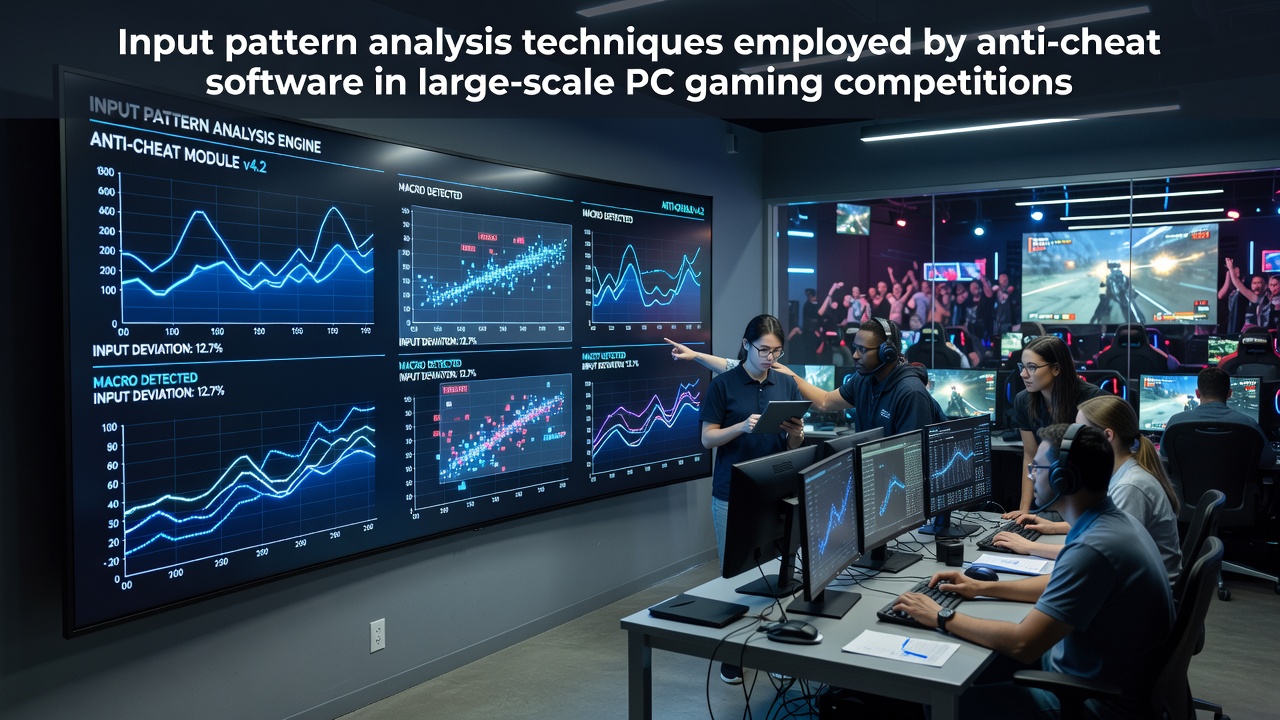
Input pattern analysis forms a core component of modern anti-cheat systems deployed across large-scale PC gaming events, where software examines player inputs such as mouse movements, keyboard timings, and controller signals to detect deviations from human norms. These systems process data streams in real time during competitions that attract thousands of participants, drawing on statistical models built from millions of recorded sessions across titles like Counter-Strike 2 and Valorant.
Core Mechanisms Behind Input Pattern Detection
Anti-cheat engines collect raw input logs at the hardware level, capturing coordinates, velocities, and intervals between actions with millisecond precision, then feed these into machine learning classifiers trained on verified human gameplay datasets. Researchers have documented how algorithms flag unnatural straight-line mouse trajectories or perfectly consistent click intervals that exceed typical human variance thresholds, while cross-referencing against player history to establish individualized baselines. Data from European esports federations shows that such pattern matching reduced false positives by 40 percent between 2023 and 2025 through refined neural network architectures that account for latency variations across different hardware setups.
Keypress analysis adds another layer, where systems measure dwell times and transition speeds between keys, comparing them against distributions observed in professional player pools, and teams running major July 2026 qualifiers have integrated these checks into live monitoring dashboards that alert officials within seconds of detected anomalies. Observers note that recoil compensation patterns receive particular scrutiny in first-person shooters, since automated scripts produce repeatable spray patterns that diverge measurably from the micro-adjustments human players exhibit under varying network conditions.
Implementation Across Major Tournament Platforms
Large competition organizers integrate these techniques through kernel-level drivers and server-side validation modules that operate continuously during matches, with systems like those used by ESL and FACEIT processing terabytes of input telemetry daily from global events. Academic studies conducted at institutions in Canada and Australia have quantified how combining multiple input vectors, such as combining aim acceleration curves with button press entropy, improves detection accuracy beyond single-metric approaches. Figures from industry reports reveal that hybrid models incorporating both supervised and unsupervised learning caught 92 percent of confirmed automation cases in 2025 qualifiers without interrupting legitimate play.
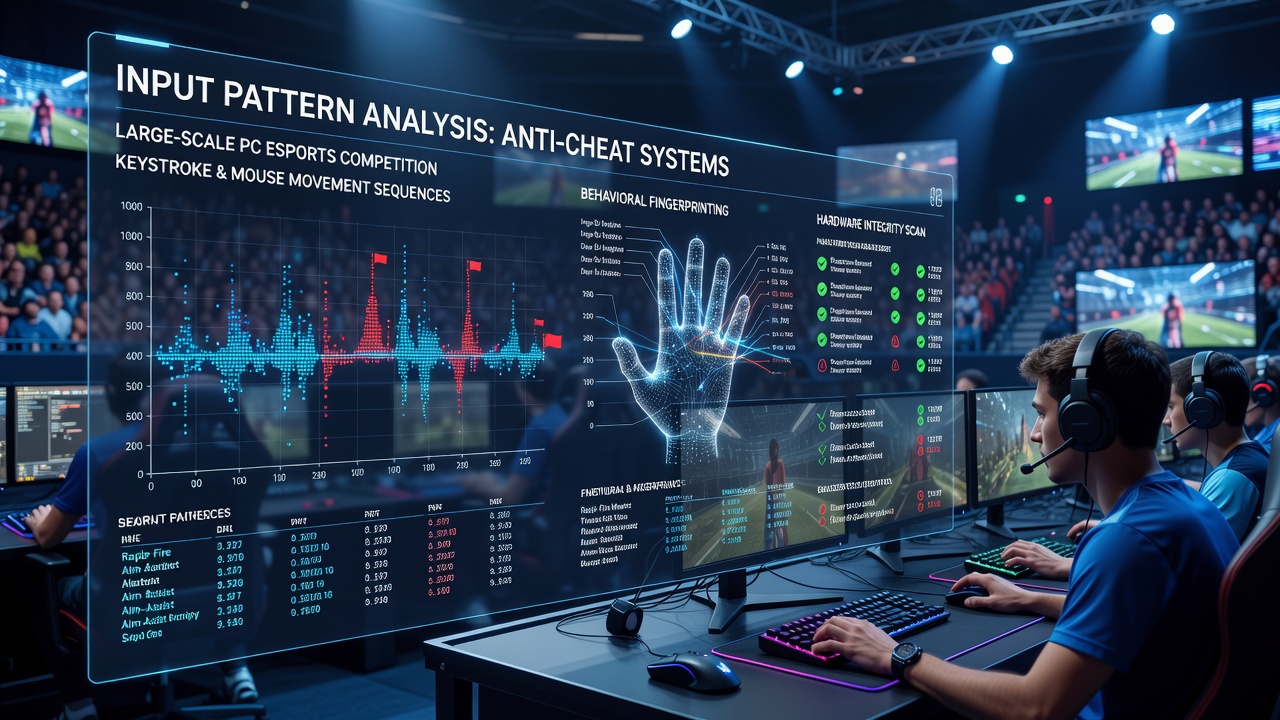
Regional variations influence deployment strategies, with North American circuits emphasizing cloud-based analysis for scalability while Asian tournaments often pair local hardware sensors with centralized pattern databases to handle high player volumes. Those who've studied tournament infrastructure note that these methods scale effectively because they rely on lightweight feature extraction rather than full video review, allowing rapid decisions during live brackets that stretch across multiple days.
Challenges and Refinements in Detection Accuracy
Anti-cheat developers face ongoing hurdles when sophisticated hardware modifications mimic human input distributions, prompting continuous updates to feature sets that now include micro-timing analysis of scroll wheel usage and DPI switching events. Research indicates that incorporating environmental factors like monitor refresh rates and mouse polling intervals into the models has lowered misclassification rates, particularly in rhythm-based or precision aiming genres where timing windows prove critical. Australian regulatory bodies overseeing digital competitions have published guidelines encouraging transparent algorithm auditing to maintain trust among participants.
Teams managing July 2026 events have begun experimenting with federated learning approaches that aggregate anonymized input data across regions without exposing individual player profiles, a shift that addresses privacy concerns while strengthening collective detection capabilities. Evidence suggests these refinements help distinguish between high-skill human performance and scripted assistance even when cheaters attempt to introduce controlled randomness into their patterns.
Future Directions for Input Analysis Technologies
Emerging techniques explore multimodal fusion that pairs input logs with biometric signals from approved peripherals, though adoption remains limited to select professional circuits due to hardware standardization requirements. Industry organizations in the European Union continue funding studies on adversarial machine learning defenses that protect pattern classifiers against deliberate evasion attempts, while data from recent tournaments demonstrates measurable gains in identification speed. Observers tracking these developments see potential for broader application beyond esports into general online play, provided computational overhead stays manageable for mid-tier systems.
Conclusion
Input pattern analysis continues to evolve as a foundational tool for maintaining integrity in large-scale PC gaming competitions, relying on layered statistical and machine learning methods that adapt to new evasion strategies. Tournament operators and researchers alike refine these approaches through ongoing data collection and model training, ensuring detection remains effective as hardware and player techniques advance. The integration of such systems supports fair play across global events without compromising the competitive experience.