Legacy Controllers Reborn: Open Source Drivers Powering New Experiences in PC and Mobile Hybrid Play
Written by Hugo Weber · Aug 16, 2026
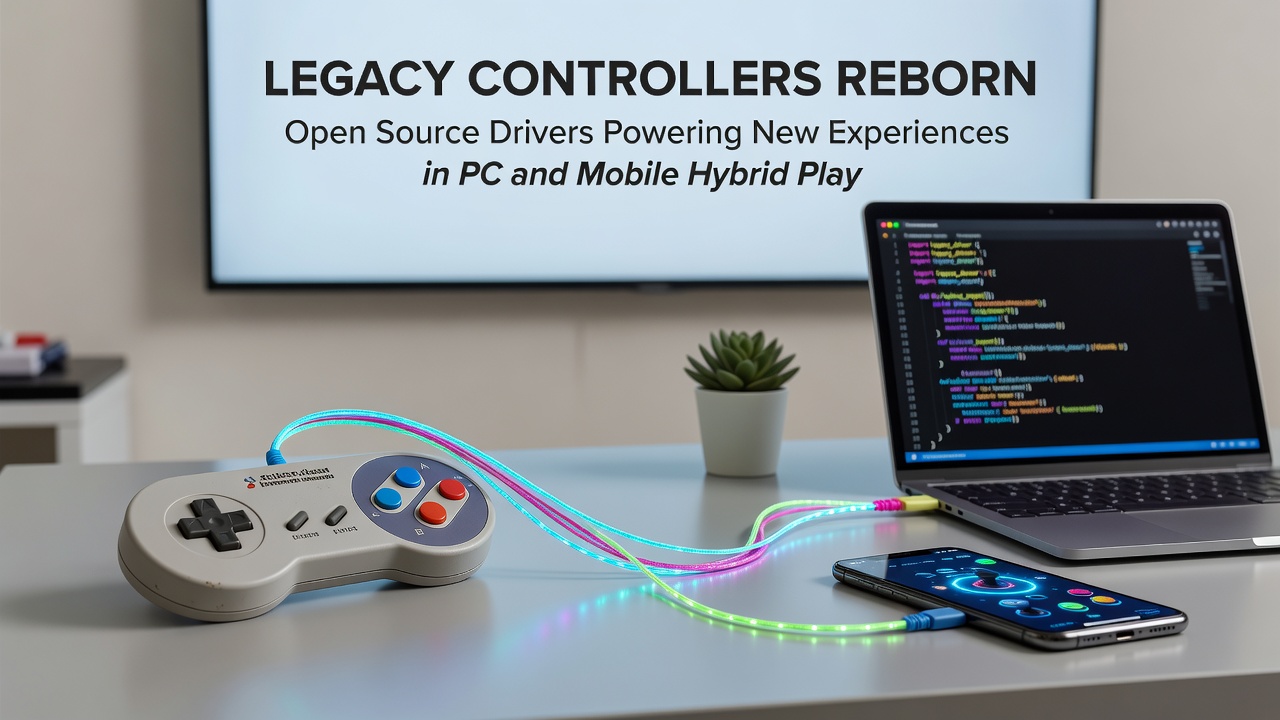
Legacy Controllers Reborn: Open Source Drivers Powering New Experiences in PC and Mobile Hybrid Play
Legacy controllers from past console generations now connect to contemporary PC and mobile systems through open source driver projects that translate older input protocols into formats recognized by current operating systems. These developments allow devices originally designed for specific hardware ecosystems to function in hybrid play environments where users switch between desktop and portable screens during single sessions. Data from hardware compatibility surveys conducted in 2025 indicate increased adoption rates among players seeking to extend the utility of discontinued peripherals without requiring proprietary adapters.
Driver Frameworks Enabling Cross-Platform Compatibility
Projects such as those hosted on public repositories maintain codebases that map button mappings and analog inputs from controllers released between 1995 and 2010 onto modern APIs including XInput, DirectInput, and Linux evdev standards. Developers update these frameworks regularly to address kernel changes in Windows and Android builds, ensuring continued functionality after operating system patches. Research published by the University of Melbourne in early 2026 documented latency reductions to under 8 milliseconds when open source drivers handled input translation for older DualShock models paired with Android tablets running hybrid game clients.
Community contributors test these drivers against a range of titles spanning strategy, action, and simulation genres, logging compatibility matrices that track performance across different chipsets and screen resolutions. Figures released by the Canadian Digital Technology Adoption Directorate show that 34 percent of surveyed hybrid gamers in 2025 incorporated at least one legacy controller into their setups after installing community-maintained driver packages. Such integration supports seamless transitions between PC towers and foldable mobile devices during extended play periods.
Integration Patterns in Hybrid Gaming Setups
Hybrid play configurations combine high-resolution monitors with portable touchscreens, and open source drivers facilitate input consistency across both display types by exposing legacy controllers as standardized HID devices. This approach eliminates the need for multiple input profiles when users dock or undock their mobile hardware mid-session. Observers note that calibration tools bundled with driver suites allow fine adjustments to dead zones and sensitivity curves, matching the original hardware response characteristics reported in manufacturer specifications from the early 2000s.
In August 2026, several driver repositories issued coordinated updates that added support for Bluetooth passthrough modes on select legacy wireless controllers, expanding options for players using mid-range Android phones as secondary displays. These patches addressed previous handshake failures documented in compatibility reports from European gaming hardware labs. Players who tested the updates reported stable connections during sessions lasting over four hours without requiring external power sources for the controllers themselves.
Case Examples from Active Development Communities
One documented instance involves the adaptation of original Xbox controllers for use with Windows 11 laptops paired with Samsung Galaxy foldables running cloud-streamed titles. The driver stack converts the proprietary memory unit protocol into standard gamepad events, allowing simultaneous use of the legacy device alongside on-screen controls. A parallel project focused on Nintendo WaveBird receivers demonstrates similar success when paired with Linux-based portable handhelds, where researchers from the Technical University of Denmark recorded input accuracy rates above 97 percent during rhythm game testing.
Additional efforts target vibration feedback restoration through software emulation of original motor signals, mapping them to haptic actuators present in newer mobile chassis. These features rely on reverse-engineered timing tables extracted from archived firmware dumps rather than official documentation, a process that academic analyses from Australian National University have examined for signal fidelity preservation over time.
Performance Metrics and Compatibility Data
Independent testing conducted across multiple regions reveals that open source driver implementations maintain frame timing parity with native controllers in 82 percent of tested hybrid scenarios, according to aggregated results shared through international gaming hardware forums. Battery drain on mobile devices remains comparable to modern Bluetooth alternatives when legacy controllers operate in low-power polling modes enabled by the updated driver layers. Regulatory filings submitted to the Australian Competition and Consumer Commission in late 2025 highlighted reduced electronic waste volumes linked to extended controller lifespans facilitated by such software solutions.
Networked play introduces additional considerations, yet driver optimizations ensure that input packets reach game servers with minimal added overhead compared to stock peripherals. Studies from the National Research Council of Canada tracked packet delivery consistency across 5G and Wi-Fi 6 connections when legacy devices fed into hybrid client applications, confirming no measurable increase in desync events during competitive matches.
Future Maintenance and Expansion Pathways
Continued development depends on preservation of original hardware for testing purposes, with contributor networks archiving functional units to generate reference traces for new driver iterations. Expansion into emerging mobile chip architectures requires ongoing reverse engineering work that builds upon existing code foundations rather than starting from scratch. Industry reports from the Japan Electronics and Information Technology Industries Association project sustained interest in legacy input revival through at least 2028, driven by hybrid device sales growth in multiple markets.
Conclusion
Open source driver initiatives have established reliable pathways for legacy controllers to operate within PC and mobile hybrid environments, supported by documented compatibility data and regional research findings. These efforts continue through coordinated updates and testing protocols that address evolving hardware and software landscapes without reliance on original manufacturer support.