Mapping Broadband Barriers to Narrative Mobile Game Popularity in Underserved Territories
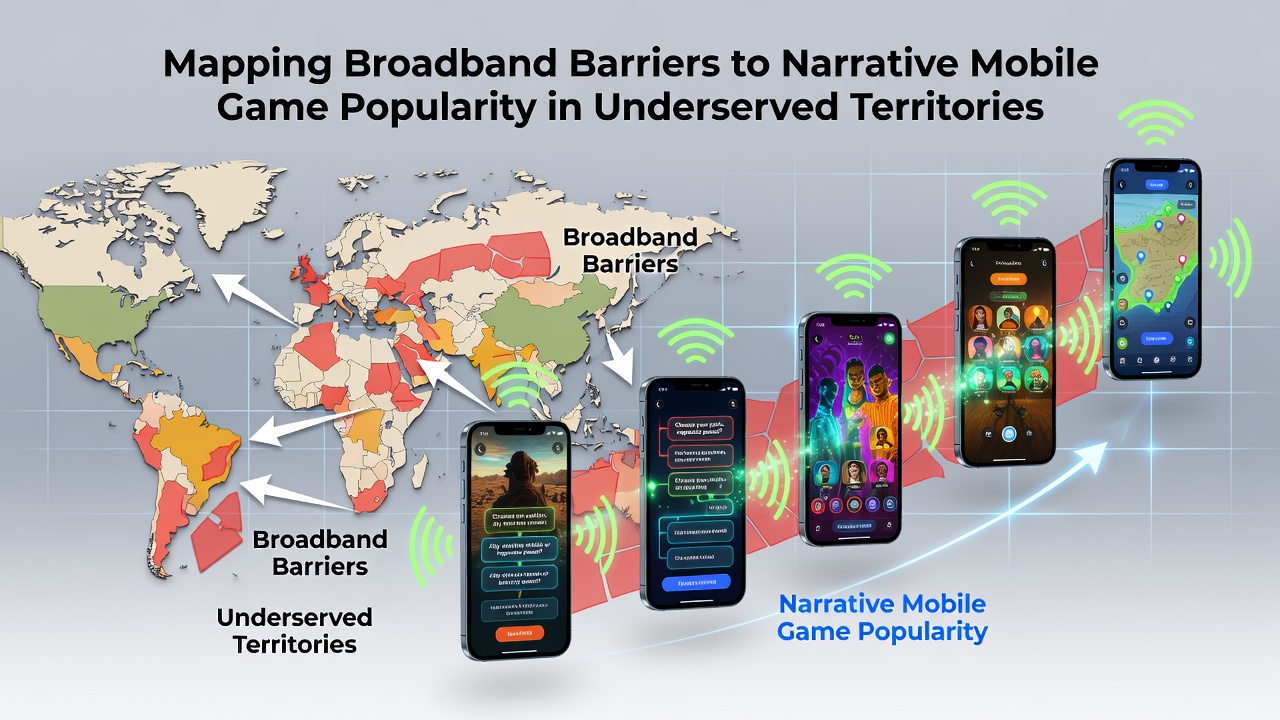
Underserved territories around the world face persistent gaps in broadband infrastructure that directly shape which types of mobile games gain traction among local players. Narrative-driven titles often require substantial data for initial downloads, regular updates, and cloud-based features, yet many regions lack the reliable high-speed connections needed to support consistent engagement with these experiences.
Researchers tracking mobile usage patterns have documented how download sizes exceeding 500 megabytes create immediate hurdles in areas where average connection speeds hover below 5 megabits per second. Data from industry monitoring groups shows these barriers concentrate in rural zones across North America, sub-Saharan Africa, and parts of Southeast Asia, where fiber and 4G coverage remain patchy even as of mid-2026.
Connectivity Gaps and Regional Data Patterns
Mapping exercises conducted by telecommunications analysts reveal clear correlations between broadband availability and the types of games that achieve widespread adoption. Areas with intermittent 3G or early 4G service tend to favor smaller, offline-capable titles, whereas narrative games built around branching stories, frequent asset updates, and social features struggle to maintain player bases. According to connectivity reports compiled by the GSMA, mobile broadband penetration in rural districts of several African nations still lags urban centers by more than 40 percentage points, limiting opportunities for data-intensive gameplay.
Observers note that players in these territories often rely on prepaid data plans with strict caps, making repeated downloads of large narrative game files financially impractical. Studies from academic institutions in Australia have quantified how latency spikes above 150 milliseconds disrupt real-time story elements and multiplayer narrative arcs, prompting users to abandon titles after initial attempts.
How Narrative Games Strain Limited Networks
Narrative mobile games typically incorporate voice acting, high-resolution cutscenes, and dynamic content delivery systems that demand steady bandwidth. Developers design these elements to enhance immersion, yet the same features become liabilities when connections drop or throttle during peak hours. Figures released by regulatory bodies in Canada indicate that households in remote provinces experience average monthly data allowances that fall short of supporting even one full narrative game update cycle per device.
Community reports collected through regional app stores further illustrate the pattern: titles with modular story packs see completion rates drop sharply once cumulative download requirements exceed available data budgets. Those who've examined user telemetry across multiple markets find that players frequently switch to lighter puzzle or endless runner alternatives when narrative content fails to load reliably.
Case Examples from Underserved Markets
One documented instance involves rural districts in northern India where community centers installed shared Wi-Fi hotspots in 2025. Initial spikes in narrative game installations occurred during the first weeks, followed by sharp declines once daily usage caps took effect. Similar observations emerged from Appalachian counties in teh United States, where federal mapping initiatives released updated coverage data in June 2026 showing persistent white spaces despite infrastructure investments.
Industry organizations tracking app engagement have recorded how developers respond by offering stripped-down versions or offline story modes, yet these adaptations rarely match the full experience available to users on stronger networks. Researchers at European universities have begun cross-referencing app store metadata with national broadband maps to identify territories where narrative genres remain underrepresented despite high mobile phone ownership rates.
Emerging Mapping Techniques and Data Integration
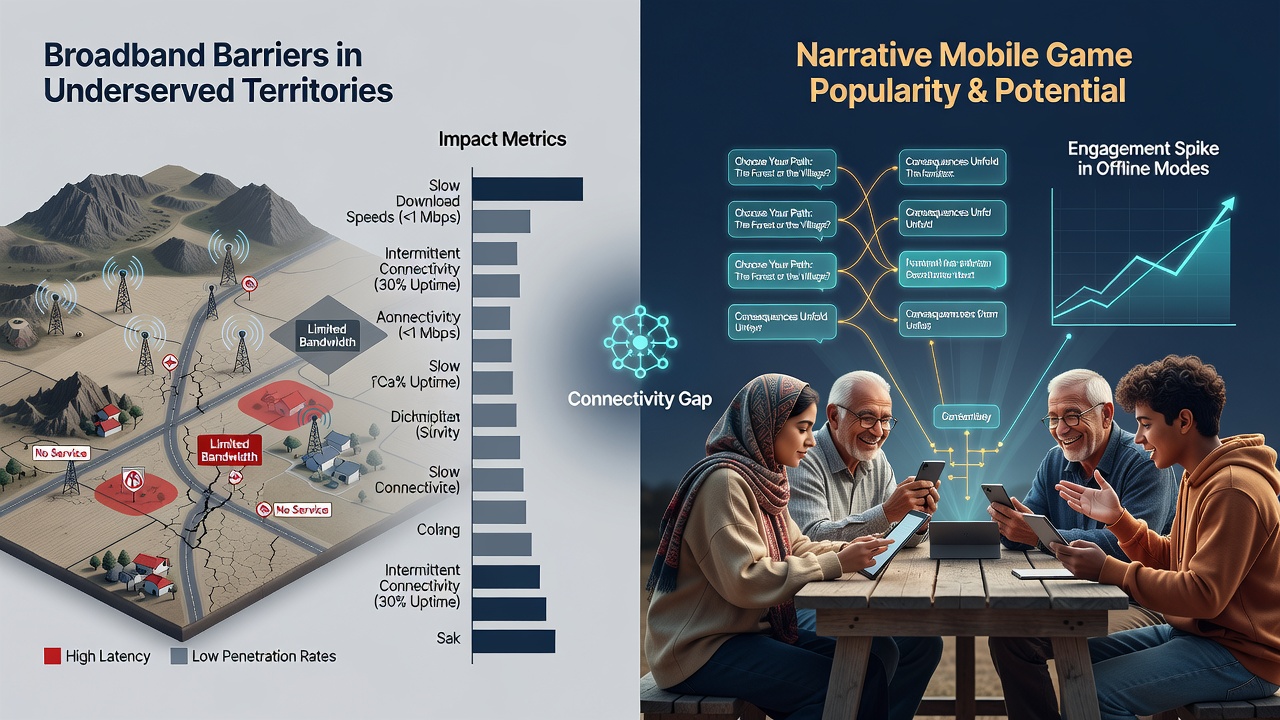
Analysts increasingly combine satellite imagery, crowdsourced speed tests, and app telemetry to create detailed barrier maps. These tools highlight micro-regions where even modest improvements in upload speeds could unlock broader access to narrative content. Government agencies in the European Union have funded pilot projects that overlay game download statistics onto existing digital divide visualizations, producing actionable datasets for infrastructure planners.
What's interesting is how these maps also reveal seasonal fluctuations, with harvest periods or monsoon seasons further reducing available connectivity windows in agricultural communities. Players adapt by pre-downloading content during brief windows of better service, though this strategy works only for games that support offline progression.
Future Trajectories Based on Current Trends
Projections based on 2025-2026 infrastructure rollouts suggest gradual improvements in several underserved corridors, particularly where 5G small cells and fixed wireless access expand. Yet analysts caution that narrative game developers must continue optimizing asset streaming and compression if they want sustained adoption beyond urban cores. Data aggregated by research institutions shows that territories gaining even 10 megabit average speeds see measurable upticks in complex story-driven mobile titles within six months.
Those mapping these dynamics emphasize the value of localized partnerships between carriers, device makers, and game studios to test lighter distribution models. Continued refinement of these barrier maps will help stakeholders target resources where they can most effectively expand access to richer narrative experiences.
Conclusion
Broadband limitations continue to filter the mobile game landscape in underserved territories, steering player preferences toward content that fits within existing connectivity constraints. Ongoing mapping efforts provide clearer pictures of where infrastructure upgrades could open doors for more narrative-rich options. As networks evolve through 2026 and beyond, the relationship between access quality and game genre popularity will remain a key metric for understanding digital inclusion in gaming.