Regional Power Dynamics: Grid Stability's Influence on Frame Delivery in Cloud-Streamed Mobile Strategy Esports
Written by Logan Reed · Jul 30, 2026
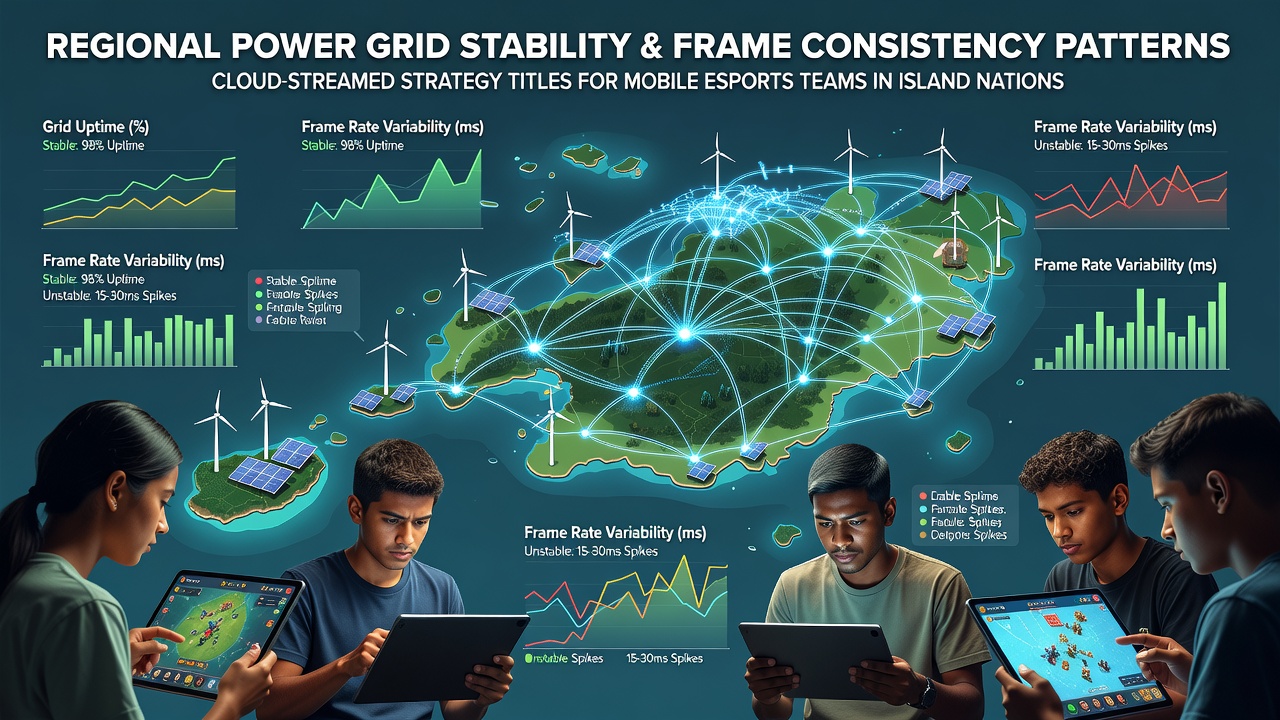
Regional Power Dynamics: Grid Stability's Influence on Frame Delivery in Cloud-Streamed Mobile Strategy Esports
Island nations face distinct challenges when it comes to maintaining consistent electrical supply for technology infrastructure, and these conditions directly affect cloud-based gaming services used by mobile esports teams. Strategy titles delivered through cloud streaming rely on stable server operations and network pathways, both of which can experience disruptions when regional power grids encounter voltage variations or supply interruptions. Data centers located in these areas often draw from local grids that incorporate a mix of imported fuel generation and intermittent renewable sources, creating patterns of inconsistency that surface during competitive play.
Grid Characteristics in Island Settings
Many island nations operate smaller-scale power systems compared with continental networks, and this scale contributes to faster propagation of disturbances across the system. In archipelagic regions such as Indonesia and the Philippines, transmission lines span multiple islands, and any single point of failure can produce cascading effects on connected facilities including edge servers used for game streaming. Researchers tracking grid events have noted that frequency deviations occur more often in these isolated grids, and such deviations force backup systems to activate, introducing brief latency spikes that manifest as frame time irregularities for players receiving streams.
Teams competing in mobile esports circuits report that practice sessions scheduled during peak demand hours sometimes coincide with measurable drops in stream quality. These drops appear as increased variability in frame delivery intervals rather than outright disconnections, because cloud platforms attempt to compensate through adaptive bitrate adjustments. Observers note that the compensation mechanisms themselves can produce visible stuttering when underlying power conditions remain unstable for extended periods.
Connection Between Power Events and Streaming Metrics
Frame consistency in cloud-streamed strategy games depends on predictable packet arrival times at the player device, and power-related interruptions at upstream facilities interrupt that predictability. When a regional substation experiences a sag, servers may throttle processing speeds to stay within safe voltage limits, and this throttling alters the encoding pipeline responsible for generating game frames. Studies of similar infrastructure have shown that even sub-second power events can produce measurable increases in frame time variance lasting several seconds afterward as systems stabilize.
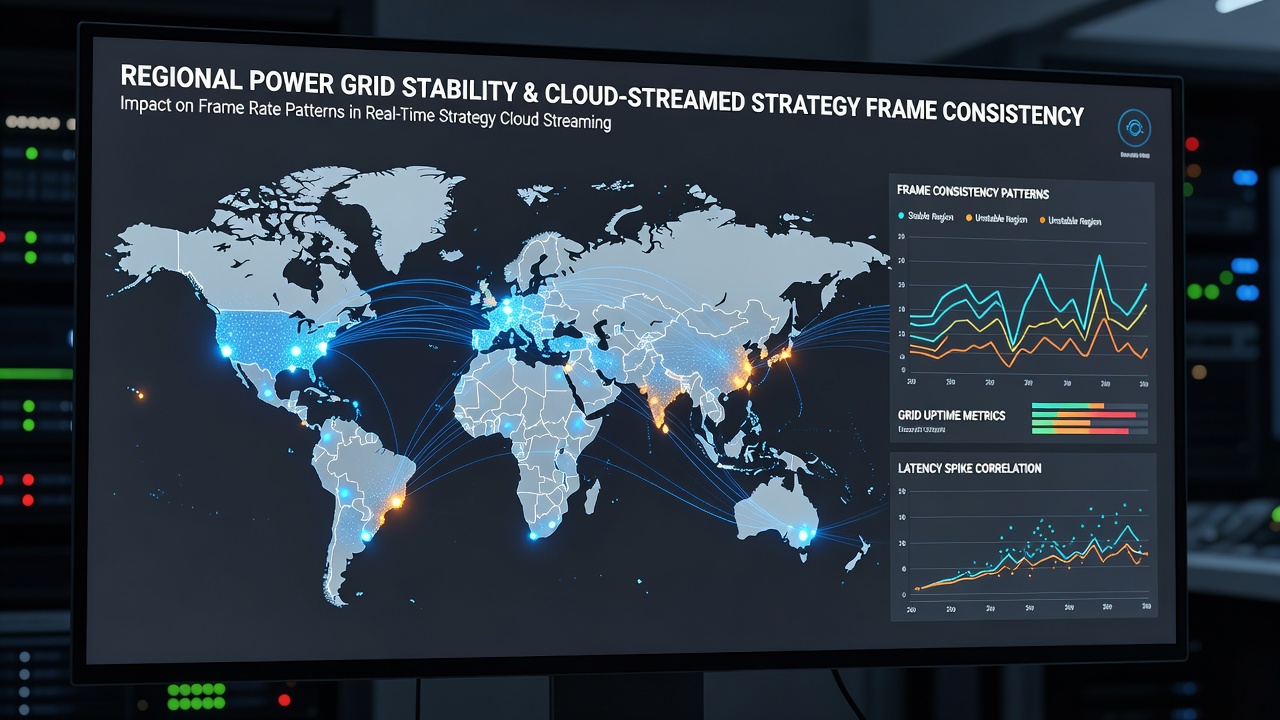
Teams based in nations with higher renewable penetration, such as those utilizing wind or solar arrays, encounter additional variability because these sources fluctuate with weather patterns common to island environments. The resulting supply swings require rapid grid balancing, and balancing actions sometimes coincide with moments of high esports activity. According to findings presented by the Asian Development Bank in regional energy assessments, island grids can experience frequency excursions up to three times more frequently than larger interconnected systems, creating recurring windows of elevated risk for streaming performance.
Observed Patterns During Competitive Events
Analysis of tournament data collected during the 2026 Pacific Esports Championship revealed correlations between local grid alerts and frame delivery statistics for participating mobile teams. Squads located in areas that issued voltage warnings on specific match days showed higher standard deviation in frame intervals compared with teams operating from facilities with dedicated backup generation. The differences appeared most clearly in real-time strategy titles that maintain continuous simulation states, because these games transmit frequent state updates that suffer when encoding resources become temporarily constrained.
Coaches working with island-based squads have begun incorporating grid status monitoring into preparation routines, reviewing utility reports alongside traditional network diagnostics. This practice allows teams to anticipate periods when frame consistency may degrade and to adjust training schedules accordingly. Data collected from multiple events indicates that proactive scheduling around known grid maintenance windows reduces the incidence of mid-session frame spikes by measurable margins.
Technical Responses and Infrastructure Adjustments
Cloud service providers serving island markets have deployed localized caching nodes equipped with short-term energy storage to buffer against brief grid events. These installations draw from National Renewable Energy Laboratory microgrid research and allow encoding workloads to continue uninterrupted during minor disturbances. Mobile esports organizations in turn have adopted client-side buffering strategies that smooth minor delivery variations, although these buffers add input latency that can affect precise command timing in fast-paced strategy matches.
Network operators in places such as New Zealand and the Caribbean have published interconnection standards that encourage data centers to maintain on-site generation capacity sized for critical loads. Teams that route streams through facilities meeting these standards record lower rates of frame time fluctuation during monitored sessions, according to internal telemetry shared across several regional circuits.
Conclusion
Power grid stability in island nations exerts a measurable influence on the frame delivery characteristics of cloud-streamed strategy titles used in mobile esports. Voltage fluctuations and frequency events originating from local generation and transmission systems propagate through data center operations and network pathways, producing detectable variations in frame timing for competing teams. Documentation from multiple 2026 events and infrastructure studies shows that monitoring grid conditions alongside conventional network metrics allows teams to reduce exposure to these variations through scheduling and facility choices. Continued deployment of localized energy storage and adherence to updated interconnection requirements offer pathways to narrower frame time distributions across island-based competitive environments.