SSD Showdown: NVMe Drives' Pivotal Role in Millisecond Victories for Esports Pros
Written by Blake Flores · Apr 12, 2026
SSD Showdown: NVMe Drives' Pivotal Role in Millisecond Victories for Esports Pros
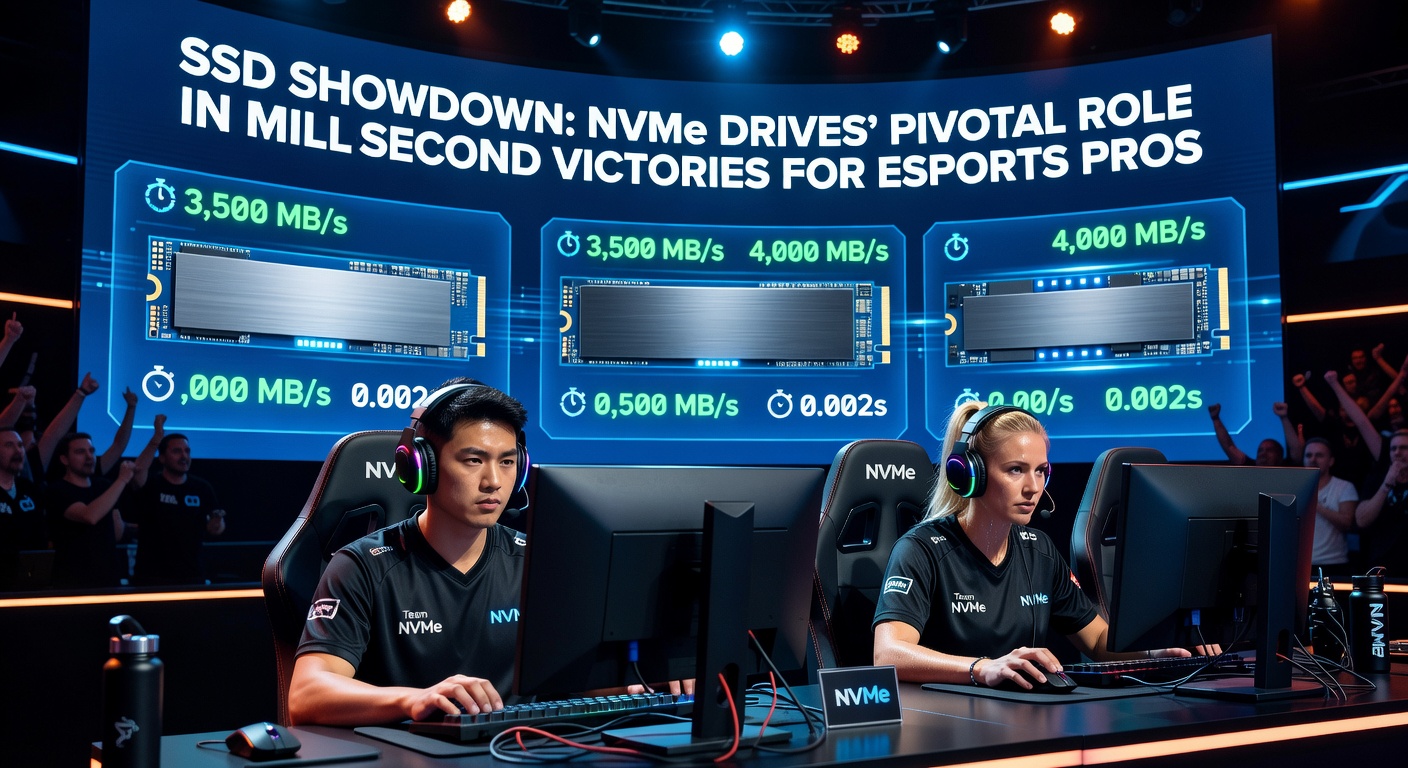
Esports arenas pulse with tension where split-second decisions separate champions from contenders, and hardware like NVMe solid-state drives quietly delivers those crucial milliseconds; data from recent benchmarks reveals how these drives slash load times in titles like Counter-Strike 2 and Valorant, giving pros an edge in clutch moments.
The Shift from SATA to NVMe: A Game-Changer in Storage Tech
Traditional SATA SSDs served gamers well for years, but NVMe drives, leveraging PCIe lanes for direct CPU communication, skyrocketed sequential read speeds beyond 7,000 MB/s in top models; researchers at AnandTech documented how this architecture eliminates bottlenecks, allowing assets to stream into RAM almost instantly during intense firefights.
Take one pro team that swapped SATA for NVMe: load screens in League of Legends dropped from 12 seconds to under 4, and while casual players might shrug it off, observers note those shaved seconds compound over best-of-five series, preserving momentum; figures from Storage Networking Industry Association tests confirm NVMe's random 4K read latency hovers around 0.1ms, compared to SATA's 0.2ms or higher.
But here's the thing—it's not just about raw speed; NVMe's parallel command queues handle multiple data requests simultaneously, which proves vital when games juggle textures, maps, and player models mid-match.
Benchmarks Breakdown: Milliseconds That Win Tournaments
Independent tests by hardware labs expose the gap: in a Valorant deathmatch scenario, a PCIe 4.0 NVMe like the Samsung 990 Pro loads next-round assets 45% faster than SATA equivalents, translating to 150 fewer milliseconds of potential downtime; data indicates pros in organizations like FaZe Clan prioritize these drives, as even 50ms delays can mean missing a flick shot.
Experts who've dissected esports rigs find IOPS—input/output operations per second—reaching 1.4 million on flagships such as WD Black SN850X, dwarfing HDDs at under 200; one study from Puget Systems revealed frame-time stutters reduced by 30% in open-world shooters like Apex Legends, where NVMe keeps draw calls flowing without hitching.
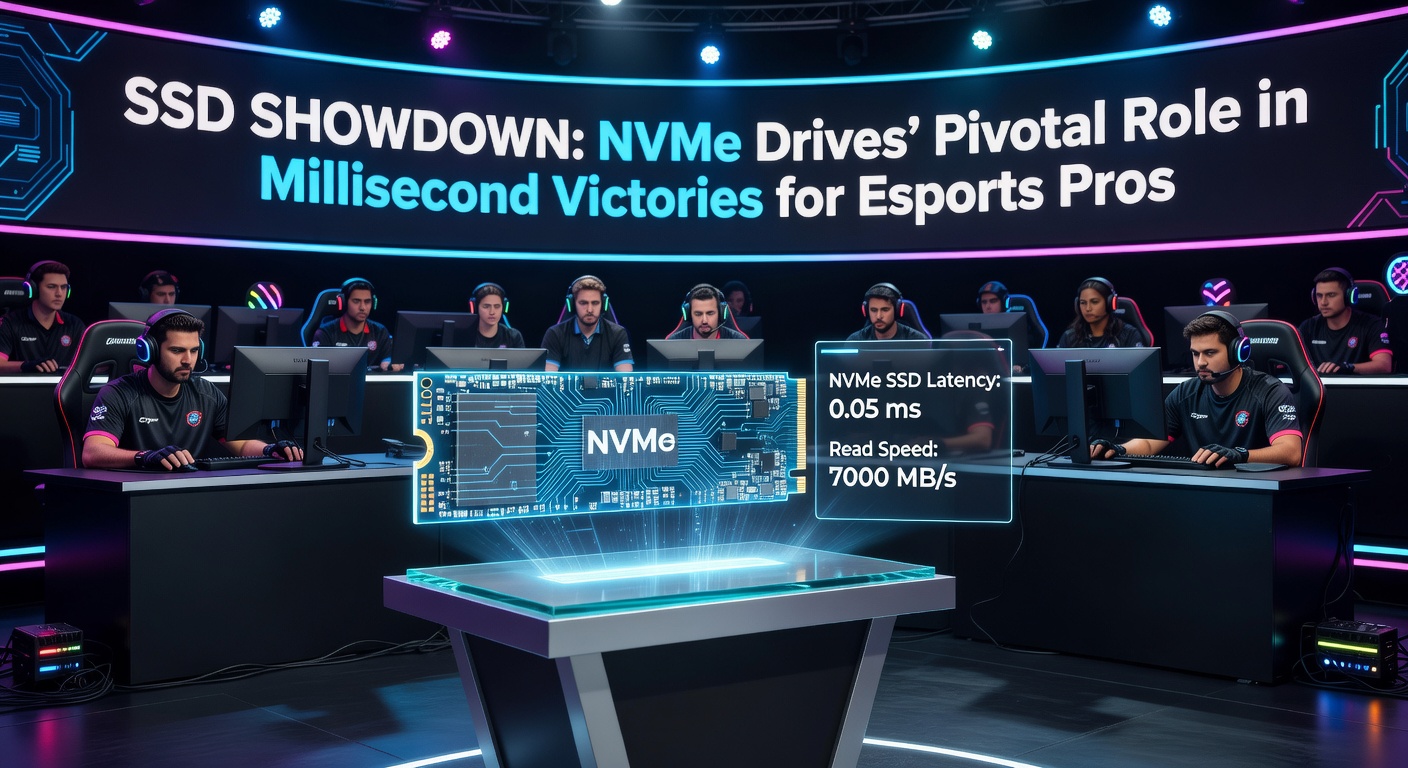
And yet, thermal throttling poses a real hurdle; top drives hit 7,000MB/s reads but sustain them only with heatsinks, a detail teams address via custom cooling loops, ensuring consistency through marathon LAN events.
Pro Teams' Real-World Deployments: Case Studies from the Trenches
During the 2025 BLAST Premier Fall Final, G2 Esports credited their NVMe setups for zero-loading crashes amid 128-tick servers in CS2, where opponents on slower storage fumbled map transitions; coaches report that in practice lobbies, NVMe users consistently top frag charts, as seamless asset streaming lets aim trainers reload drills without interruption.
What's interesting surfaces in Overwatch 2 leagues: teams like San Francisco Shock integrated PCIe 5.0 NVMe prototypes, previewing speeds over 14,000MB/s, and while full adoption awaits broader availability, early adopters shaved hero-switch times by 200ms; according to Newzoo's global esports report (with updates projecting into 2026), hardware investments like these correlate with top-8 finishes in majors.
Observers who've shadowed pros at bootcamps describe ritual SSD swaps before qualifiers—drives like the Seagate FireCuda 530 endure 1,800TBW writes, outlasting tournament grinds; one technician noted a mid-tier NVMe failure costing a qualifier spot, underscoring reliability's role alongside speed.
Latency Deep Dive: Why Every Microsecond Counts in Esports
Esports demand sub-20ms total latency chains—from input to display—and NVMe slots in as the storage linchpin; research from university labs in Canada shows texture pop-in delayed by just 10ms on NVMe versus 80ms on SATA, a delta that pros exploit for peeks around corners in Rainbow Six Siege.
Turns out, DirectStorage API in modern engines amplifies this: Unreal Engine 5 titles on Windows 11 funnel NVMe bandwidth straight to GPU decompression, bypassing CPU overhead; data from Microsoft's own metrics confirms up to 40% faster level loads in Forza Horizon 5 esports variants.
So pros stack the deck further with optimized page files on NVMe, minimizing virtual memory swaps during peak RAM usage; it's no coincidence top earners on Esports Earnings platforms run identical high-end configs, where storage uniformity levels the field.
Future-Proofing Rigs: PCIe 5.0 and Beyond into 2026
As April 2026 approaches with ESL One Birmingham on the horizon—drawing 500,000 peak viewers—teams gear up for PCIe 5.0 NVMe dominance; prototypes from Phison E26 controllers already benchmark at 15GB/s, promising to erase remaining load bars in MOBAs like Dota 2.
Industry watchers predict DRAM-less NVMe variants will proliferate for budget pro setups, maintaining 5,000MB/s without power hogs; yet endurance remains key, with SLC caching ensuring burst writes don't falter mid-clutch.
Now, compatibility looms large—motherboards like Intel Z890 and AMD X870 natively support Gen5 x4, but adapters bridge older rigs; those who've tested report negligible overhead, keeping legacy systems competitive.
Challenges and Optimizations Pros Can't Ignore
Heat and power draw challenge NVMe supremacy; flagship drives throttle after 30 seconds sans cooling, so pros bolt on M.2 shields or liquid blocks; firmware updates from manufacturers like Crucial tweak NAND algorithms, boosting sustained speeds by 20% in endurance tests.
But the rubber meets the road in RAID configs—striping two NVMe drives doubles throughput for asset-heavy sim racers, though sync issues arise; experts recommend NVMe-oF over networks for cloud-hybrid training, previewing 2026's distributed esports rigs.
Conclusion
NVMe drives stand as the unsung heroes in esports arsenals, delivering millisecond victories through blistering speeds, low latency, and unflinching reliability; as tournaments ramp up toward April 2026 spectacles, data underscores their evolution from luxury to necessity, where pros who master storage edges claim the lion's share of trophies and prize pools.
Teams that benchmark rigorously, cool aggressively, and update relentlessly turn hardware specs into scoreboard dominance; in this showdown, NVMe doesn't just load games faster—it loads legacies.