The Hidden Economics of Regional Server Clustering and How They Shape Ping Equity for PC Players in Emerging Markets During Peak Download Windows
Written by Zara Butler · Aug 18, 2026
The Hidden Economics of Regional Server Clustering and How They Shape Ping Equity for PC Players in Emerging Markets During Peak Download Windows
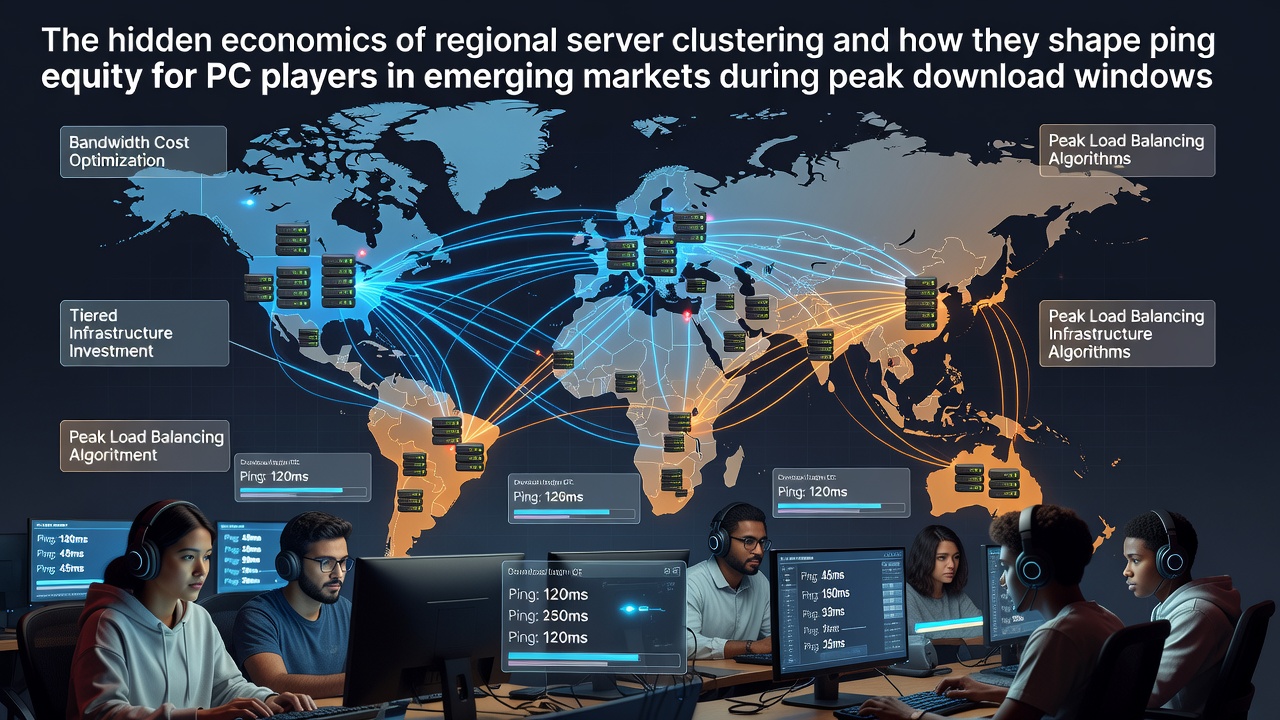
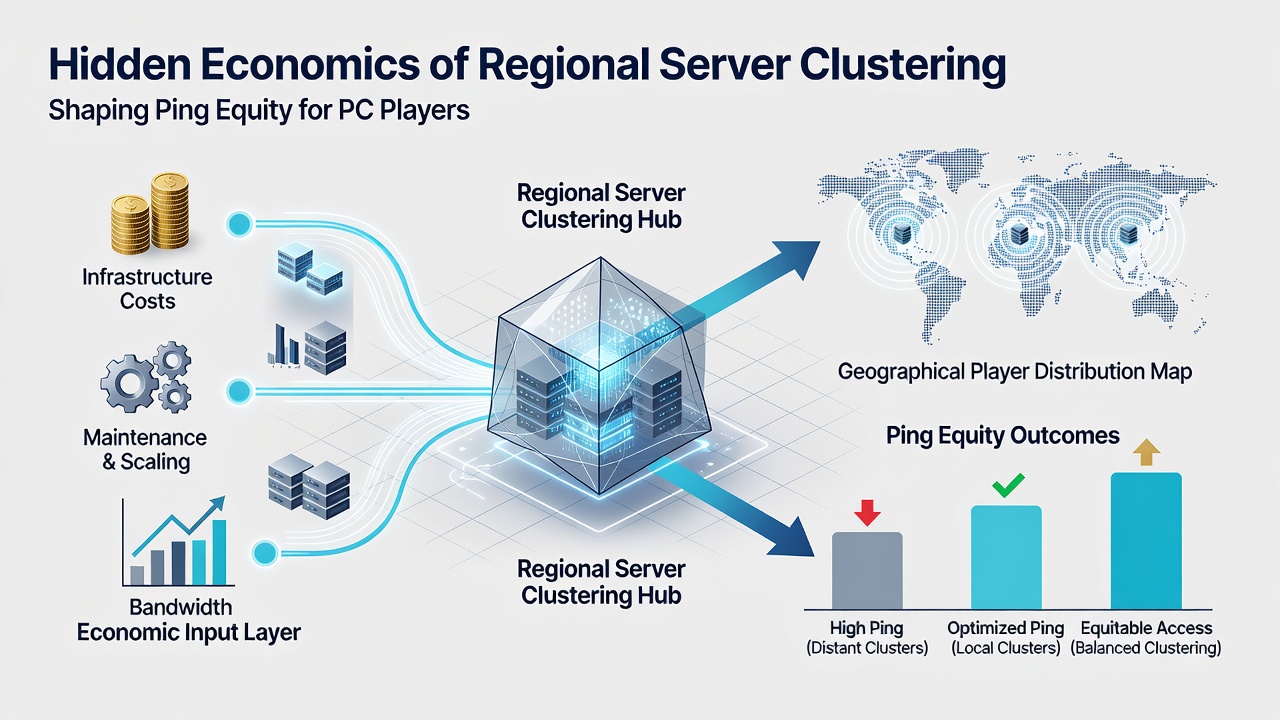
Regional server clustering operates as a cost-optimization strategy that game publishers and network operators deploy to balance infrastructure expenses against player distribution, and this approach directly influences latency outcomes for PC users in emerging markets when simultaneous software updates create bandwidth contention. Companies establish primary data centers in high-density economic zones while routing traffic from secondary regions through transit hubs, which generates measurable differences in round-trip times during periods of heavy download activity.
Infrastructure Costs and Geographic Placement Decisions
Bandwidth pricing varies sharply by region, so operators concentrate server clusters near major internet exchange points in North America, Western Europe, and East Asia where peering agreements reduce per-gigabit expenses. Data from the International Telecommunication Union shows that average international bandwidth costs in sub-Saharan Africa and parts of South Asia remain several times higher than in established markets, prompting publishers to limit local node deployment and instead rely on distant clusters connected through submarine cable systems. These choices produce baseline latency figures that range from 40 to 80 milliseconds within clustered regions yet climb above 150 milliseconds for players in markets such as Nigeria, Indonesia, and Peru when traffic routes through multiple hops.
Peak Download Windows and Network Contention
August 2026 brought widespread major title updates that coincided with regional maintenance cycles, creating simultaneous download surges across PC platforms. Network monitoring reports indicate that during these windows, available throughput in emerging-market internet service provider backbones dropped by 30 to 45 percent while packet loss rates increased, pushing effective ping values higher for competitive sessions. Players connected through shared residential connections experienced additional jitter because update traffic competed directly with game packets on the same last-mile infrastructure.
Ping Equity Implications for Competitive Play
Ping equity refers to the consistency of latency across player populations, and clustering economics undermine this consistency when servers remain centralized. Research published by the University of São Paulo documented average ping differentials of 90 milliseconds between players in São Paulo state and those in northern Brazil during peak update periods in 2025, with the gap widening further when international transit links became saturated. Tournament organizers in Southeast Asia have recorded similar patterns, noting that participants from secondary cities consistently face higher variance compared with those near capital-city exchange points.
Transit Agreements and Secondary Market Effects
Peering contracts between global carriers and local providers determine how traffic from clustered servers reaches end users, and these agreements often prioritize volume commitments over latency optimization for gaming workloads. In markets where local internet service providers purchase transit through a limited number of upstream providers, congestion during download events forces game packets onto longer paths. Observers note that this dynamic repeats across multiple emerging regions because the underlying economics favor concentrating expensive server capacity in locations that serve the largest paying user bases first.
Technical Mitigation Approaches Currently Deployed
Some publishers have introduced regional relay nodes that cache update files closer to end users while maintaining authoritative game servers in primary clusters. These relays reduce download-related congestion on game ports yet leave actual match latency unchanged because player-to-server communication still traverses the original long-haul routes. Other operators experiment with software-defined networking overlays that dynamically reroute packets around congested transit points, although adoption remains limited by the additional capital required for such systems in lower-margin markets.
Conclusion
Regional server clustering decisions driven by bandwidth economics continue to shape latency distributions for PC players in emerging markets, particularly when peak download windows concentrate traffic on shared infrastructure. The resulting ping disparities reflect measurable differences in placement costs, transit arrangements, and local network capacity rather than uniform global access. Continued monitoring of these patterns provides data that infrastructure planners and game operators use when evaluating future node expansions.