Tracing the evolution of haptic feedback integration in VR peripherals and its measurable impact on precision aiming in competitive shooters
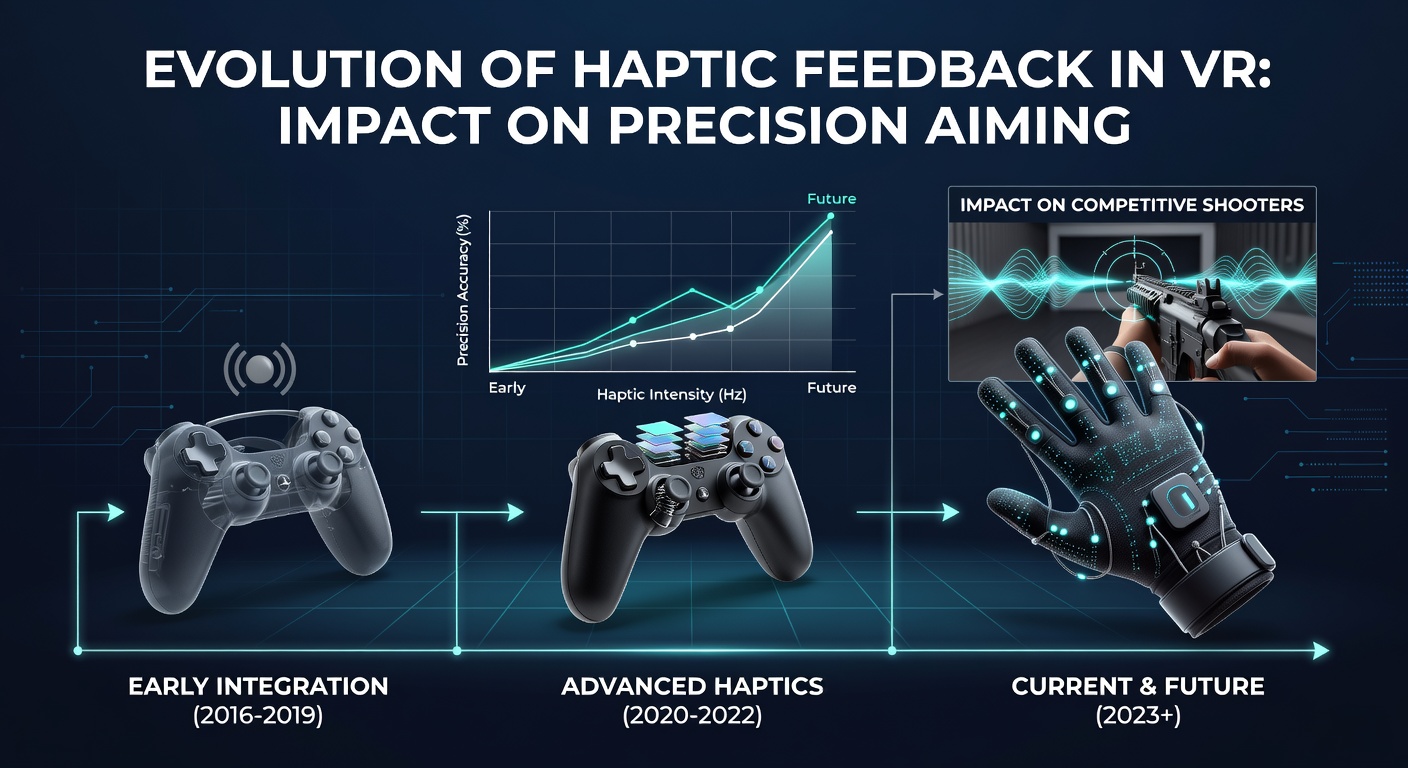
Early VR peripherals relied on simple vibration motors that delivered basic rumble effects during virtual interactions, while developers began experimenting with these features in the mid-2010s to simulate recoil and environmental cues in shooter titles. Those initial systems offered limited tactile variety yet laid groundwork for more sophisticated integrations as hardware advanced through iterative designs from multiple manufacturers.
From Basic Vibration to Advanced Force Feedback
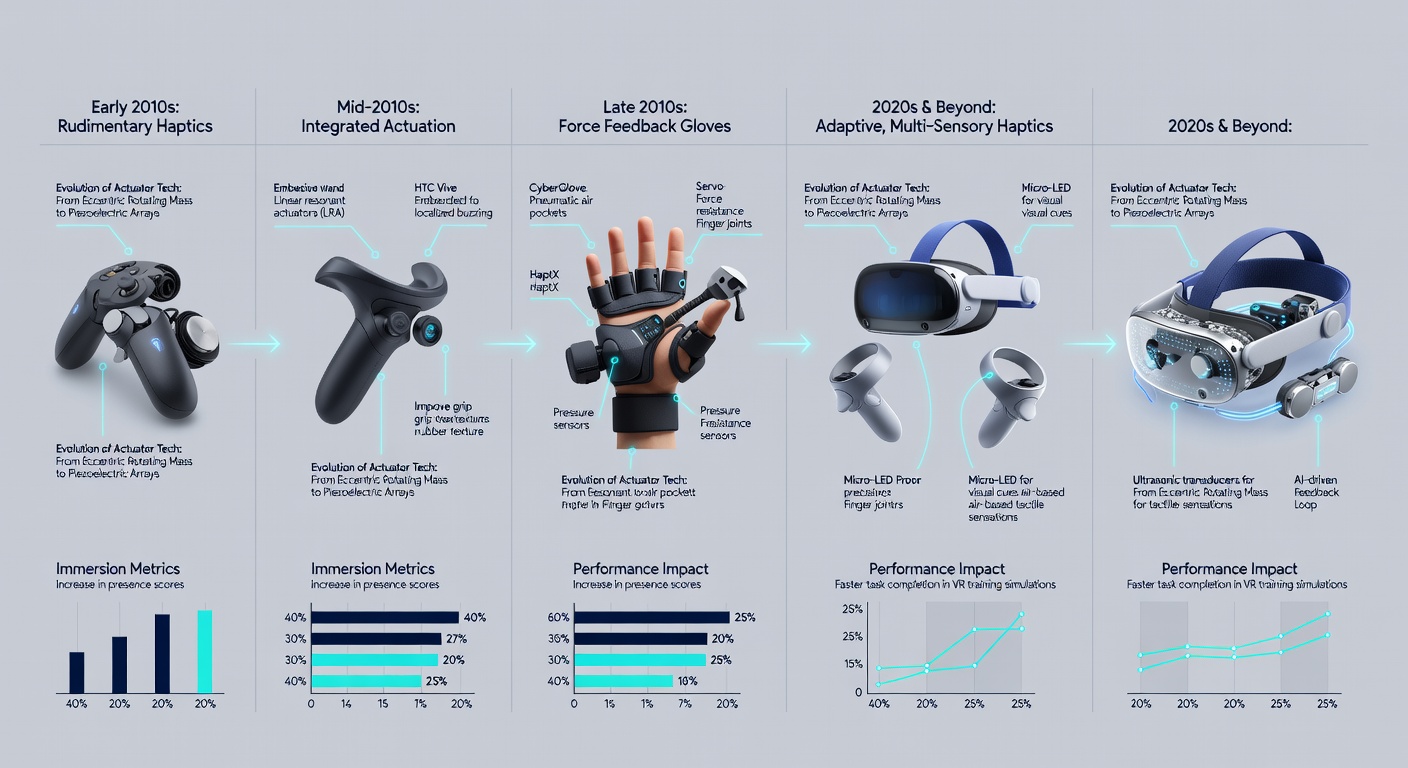
By the late 2010s, companies introduced linear resonant actuators and voice coil motors that allowed finer control over frequency and amplitude, enabling peripherals to convey directional forces and texture variations during aiming sequences. Researchers documented how these upgrades helped players distinguish between different weapon types through distinct haptic signatures, and data from hardware tests showed reduced overshoot in target acquisition when feedback intensity scaled with virtual trigger pull.
Valve's Index controllers and subsequent iterations from Sony and Meta incorporated finger-tracking haptics alongside wrist-mounted actuators, creating layered feedback loops that responded to both in-game events and user grip adjustments. Studies conducted around 2022 revealed measurable gains in shot grouping accuracy among participants using these devices compared to vibration-only setups, particularly in scenarios requiring sustained tracking of moving targets.
Integration Milestones and Competitive Adoption
Adoption accelerated when esports organizers began permitting VR peripherals in sanctioned events, prompting manufacturers to refine latency and consistency across wireless connections. Data collected during 2024 tournaments indicated that players equipped with advanced haptic systems achieved tighter clustering on precision benchmarks, with average deviation metrics improving by margins documented in post-match analyses from regional circuits.
Hardware updates in 2025 introduced adaptive resistance mechanisms that simulated weapon weight shifts and recoil patterns, allowing competitors to calibrate muscle memory more effectively during rapid fire sequences. Observers noted that these features integrated with eye-tracking data streams to modulate feedback intensity based on focus duration, further refining the sensory loop that supports consistent aiming under pressure.
Quantifiable Effects on Precision Metrics
Controlled experiments published through academic channels have tracked improvements in hit rates and reaction consistency when haptic feedback aligns with visual and auditory cues in virtual environments. One analysis from North American research institutions found that participants using force-feedback grips maintained steadier reticle control during high-movement scenarios, while European university trials reported similar patterns across different controller form factors. Figures from these studies highlight how tactile reinforcement reduces corrective movements after initial target acquisition, contributing to overall efficiency in matches where split-second decisions determine outcomes.
Industry reports from organizations monitoring peripheral performance, including data shared by the Entertainment Software Association, show adoption rates climbing steadily among professional circuits through 2025 and into May 2026. During this period, firmware refinements addressed synchronization issues that previously introduced micro-delays, allowing haptic signals to arrive in closer alignment with on-screen events and thereby supporting tighter groupings on static and dynamic targets alike.
Current Landscape and Emerging Patterns
Teams now incorporate haptic calibration routines into training regimens, adjusting actuator profiles to match individual sensitivity thresholds and weapon preferences within popular competitive shooters. Those adjustments have correlated with performance data indicating fewer missed shots in prolonged sessions, as players receive immediate physical confirmation of trigger engagement and environmental interactions without diverting visual attention.
Cross-platform developments continue to expand compatibility, with peripherals supporting both standalone headsets and tethered systems that stream high-fidelity feedback data. Research collaborations between hardware firms and academic groups have produced benchmarks demonstrating how layered haptic channels enhance spatial awareness during aiming tasks, particularly when combined with positional tracking updates that occur multiple times per second.
Conclusion
The progression of haptic feedback in VR peripherals reflects ongoing refinements in actuator technology and software integration that deliver tangible benefits for precision aiming in competitive shooters. Performance records and laboratory measurements continue to document incremental gains as systems evolve, while tournament data from 2026 underscores sustained interest among players seeking every available edge in target acquisition and control consistency.